Travel Guide · Trip Inspiration
The Palio di Siena Explained: The Race, the Contrade and How to See It
Ninety seconds, ten horses and seventeen neighborhoods. What the Palio means to Siena, and how to make it part of your trip.
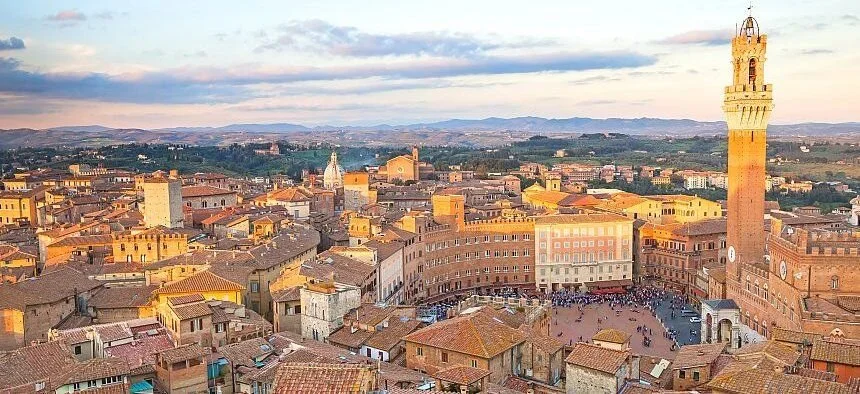
The Palio di Siena is a bareback horse race run twice a year, on July 2 and August 16, around the Piazza del Campo in Siena, Italy. Ten of the city’s 17 contrade, its historic neighborhoods, compete in each race: three laps that last about 90 seconds. Watching from the center of the square is free; seats in the stands and on balconies are sold privately and should be booked months ahead.
Twice every summer, on July 2 and August 16, ten horses race three times around the Piazza del Campo, ridden bareback, in front of tens of thousands of people. The race lasts about ninety seconds. The passion behind it lasts all year. The Palio is not a show put on for visitors; it is the heart of Sienese life, and if your trip falls in late June or mid-August, it can become the story you tell for years. Here is how it works, and how to see it.
What is the history of the Palio?
Horse races have been held in Siena since the Middle Ages, and the Palio in the Campo has been run in its present form since the 1600s. The July race, the Palio di Provenzano, honors a miraculous image of the Virgin kept in the church of Santa Maria in Provenzano. The August race, the Palio dell’Assunta, is dedicated to the Virgin of the Assumption, Siena’s protector. The prize is the palio itself: a painted silk banner, the drappellone, commissioned from a different artist each time and carried home in triumph by the winners.
What are the contrade of Siena?
Siena is divided into 17 contrade, historic neighborhoods with their own names, colors and emblems: the Eagle, the Caterpillar, the Snail, the Owl, the Dragon, the Giraffe, the Porcupine, the Unicorn, the She-Wolf, the Shell, the Goose, the Wave, the Panther, the Forest, the Tortoise, the Tower and the Ram. Each has its own church, fountain, museum and social club, and the Sienese belong to theirs for life. Children are baptized at the contrada fountain, weddings and funerals are contrada affairs, and rivalries go back centuries.
As you walk the city, look for the contrada emblems on ceramic plaques at street corners and the colored flags hanging from the windows. They tell you exactly whose territory you are in. Hunting for all 17 is a favorite game for families, and a lovely way to explore the city with children.
How does the Palio work?
Only ten contrade run in each Palio: the seven that did not run in the same race the year before, plus three drawn by lot. The horses are assigned by lot too, at the tratta, three days before the race, so no contrada can simply buy the fastest horse. The jockeys, the fantini, are professionals hired by each contrada, and the deals and alliances made behind the scenes are part of the drama.
The race starts at the mossa, a rope stretched across the track. Nine horses enter between the ropes in an order drawn at the last minute, and the tenth gallops in from behind to start the race. False starts are common and can go on for a long time. Then come three laps of the Campo, around its steep, sharp corners, on a track of packed earth laid over the stones. The first horse across the line wins, with or without its rider: a riderless horse, a cavallo scosso, can win for its contrada.
What happens in the days before the Palio?
- The tratta. Three days before the race (June 29 and August 13), the horses are assigned to the contrade in the Campo.
- The trial races. Six prove are run between the evening of the tratta and the morning of the race, one in the morning and one in the evening each day. The evening trials are a wonderful, more relaxed way to feel the atmosphere.
- The dinners. On the eve of the race, each running contrada holds an enormous outdoor dinner, the cena della prova generale, with long tables in its streets. Some contrade sell a limited number of tickets to visitors; ask us early.
- The day of the race. In the morning, the jockeys hear Mass in the chapel on the Campo. In the afternoon, each horse is blessed inside its contrada’s church. Then the historical parade, the corteo storico, fills the Campo for about two hours with drummers, flag-wavers and hundreds of people in Renaissance dress, before the race starts in the early evening.
Where can you watch the Palio?
In the center of the Campo. Standing in the middle of the piazza is free. Arrive by early afternoon for a good spot, bring water and a hat, and know that once the gates close, you will not be able to leave until after the race. It is intense, hot and unforgettable, best for adults who do not mind crowds.
In the stands or at a window. Seats on the wooden stands around the track and on balconies and windows overlooking the Campo are sold privately, and they sell out months ahead. They are more comfortable and better for families. We can help you find them when you book your villa.
At a trial race. If the race itself feels like too much, the evening trials give you the Campo, the horses and the cheering contradaioli with a fraction of the crowd.
What should visitors know about the Palio?
- Respect the colors. The Palio is deeply felt; do not wear a contrada’s scarf unless someone gives you one, and never cheer against the contrada whose streets you are standing in.
- After the race, follow the winners. The winning contrada carries the palio through the streets, singing, to give thanks in church, and the celebrations last for weeks.
- Book early. Villas within half an hour of Siena are taken a year ahead for Palio weeks. Read where to stay in Siena to choose your base, and the best time to visit Siena for the rest of the summer calendar.
| Villa | Bedrooms / sleeps | Rate | Why we chose it |
|---|---|---|---|
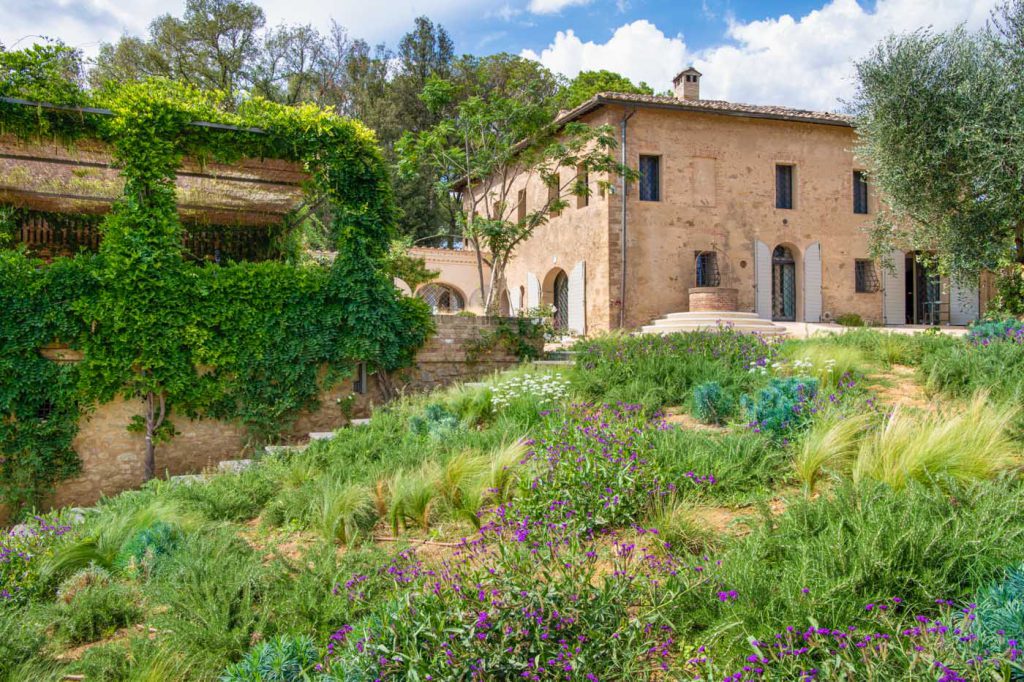
| Villa Hortus Siena |
5 / 10 | From €14,000 / week From about €200 per person a night, €1,400 a week (10 guests, 7-night minimum) |
Ten minutes from Siena's walls, an easy drive in for the trial races |
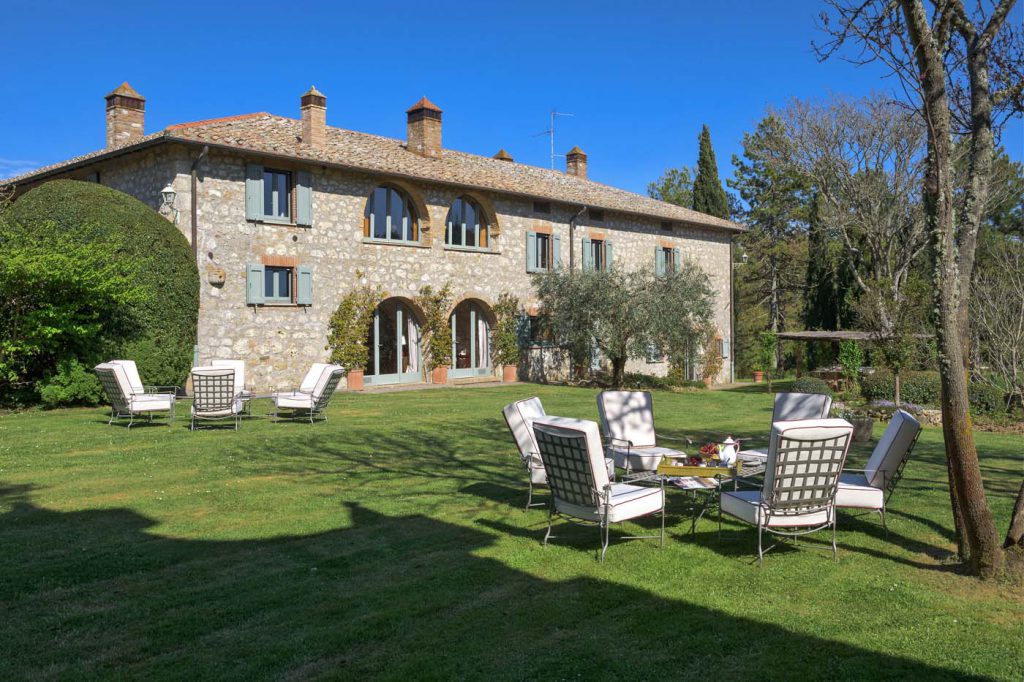
| Villa Collina Siena |
20 / 36 | Rates on request | Twenty minutes from Siena, with room for 36 and a view of the city |
Plan your Palio with us
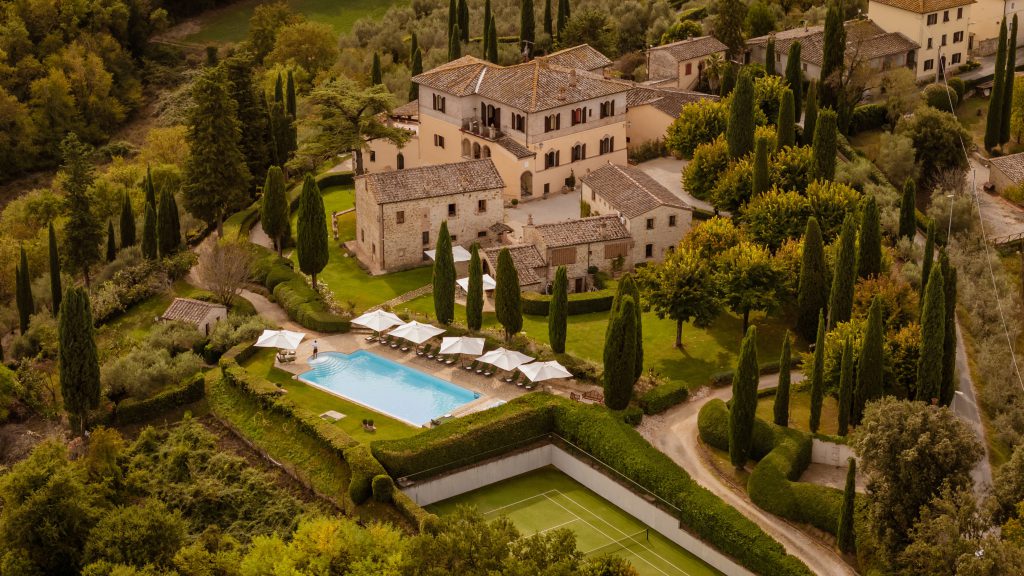
A Palio week works beautifully from a villa in the hills: drive in for the trial races and the big day, then spend the rest of the week by the pool and in the vineyards. Talk to a Doorways advisor about your dates, or browse our villas near Siena.
Frequently asked questions
How long does the Palio di Siena last?
The race itself is three laps of the Piazza del Campo and lasts about a minute and a half. The days around it, with the drawing of the horses, six trial races, the historical parade and the contrada dinners, fill four days.
Is the Palio free to watch?
Standing in the center of the Campo is free. You need to arrive hours early, there is little shade, and once the gates close you cannot leave until the race is over. Seats in the stands and on balconies are sold privately and should be booked months ahead.
What are the contrade of Siena?
The contrade are Siena's 17 historic neighborhoods, each with its own emblem, colors, church, fountain and museum. Ten of them run in each Palio.
When is the Palio in 2027?
The Palio is always run on July 2 and August 16, so in 2027 the races are on Friday, July 2 and Monday, August 16. If it rains, the race moves to the next day.
What is the horse race in Siena called?
It is called the Palio, after the painted silk banner, the palio or drappellone, that the winning contrada takes home.