Travel Guide · Day Trip Ideas
The Garfagnana and Serchio Valley: Lucca’s Wild Back Country
The Devil's Bridge, Barga, a 19th-century spa town and a cave of the wind, all within an hour of Lucca.

Drive north out of Lucca along the Serchio River and within half an hour Tuscany changes character completely. The olive groves give way to chestnut forests, the valley narrows between the marble peaks of the Apuan Alps and the Apennines, and stone villages cling to the slopes. This is the Serchio Valley and, further up, the Garfagnana: green, quiet and deeply local, the Tuscany many visitors never see. It makes a superb day trip from a villa near Lucca, or two.
The Devil’s Bridge, Borgo a Mozzano
About 25 minutes from Lucca, the Ponte della Maddalena leaps across the Serchio in a series of lopsided stone arches, its central span so steep it looks impossible. It was built around the turn of the 12th century on the pilgrim road to Rome, and legend says the builder could only finish it by promising the devil the first soul to cross. The villagers sent a dog. Stop for photos and a walk along the river, then continue north.
Bagni di Lucca: a 19th-century spa town
A short detour up the Lima valley brings you to Bagni di Lucca, whose hot springs have been used since Etruscan and Roman times. In the 1800s it was one of the most fashionable resorts in Europe. Robert and Elizabeth Barrett Browning spent summers here, the town had one of Europe’s early casinos, and an English cemetery still holds the graves of the foreigners who came for the waters. Walk across the 19th-century suspension bridge, the Ponte delle Catene, and admire the faded grandeur of the villas along the river. For a soak, see our guide to the best thermal springs in Tuscany.
Barga, our favorite hill town
About 45 minutes from Lucca, Barga is worth the drive on its own. Its steep lanes climb past old palazzi to the Romanesque Duomo of San Cristoforo, which has a remarkable carved marble pulpit inside and, from the lawn outside, one of the great views in the region across to the Apuan Alps. So many families from Barga emigrated to Scotland over the last century that it is known as the most Scottish town in Italy, and you may well hear a Glaswegian accent at the bar. In summer the town hosts music and opera festivals.
Castelnuovo di Garfagnana
The little capital of the Garfagnana is a market town with a castle at its heart, the Rocca Ariostesca, named for the Renaissance poet Ludovico Ariosto, who governed the area in the 1520s and complained bitterly about its bandits in his letters. Above the town, the vast Fortezza di Mont’Alfonso spreads across the hillside. Thursday is market day, the best time to stock up on local cheese, salumi and spelt.
The Grotta del Vento
Children and adults alike love the Grotta del Vento, the Cave of the Wind, near the village of Fornovolasco on the slopes of the Apuan Alps. Guided tours lead through galleries of stalactites, underground lakes and echoing chambers, with routes of different lengths for different energy levels. Bring a sweater: it stays cool inside even in August. It is a natural pairing with our best activities for kids in Lucca.
For walkers: canyons, lakes and mountain villages
The Garfagnana is serious walking country. The Orrido di Botri is a dramatic limestone gorge you can explore with a guide in summer, wading through the stream between sheer walls. Isola Santa, a tiny stone hamlet on a green mountain lake, is one of the most photographed spots in the valley. And trails across the Apuan Alps reward hikers with views to the sea. We are happy to arrange an English-speaking nature guide, with routes for every pace, from gentle walks through chestnut woods and old hamlets to full days in the mountains.
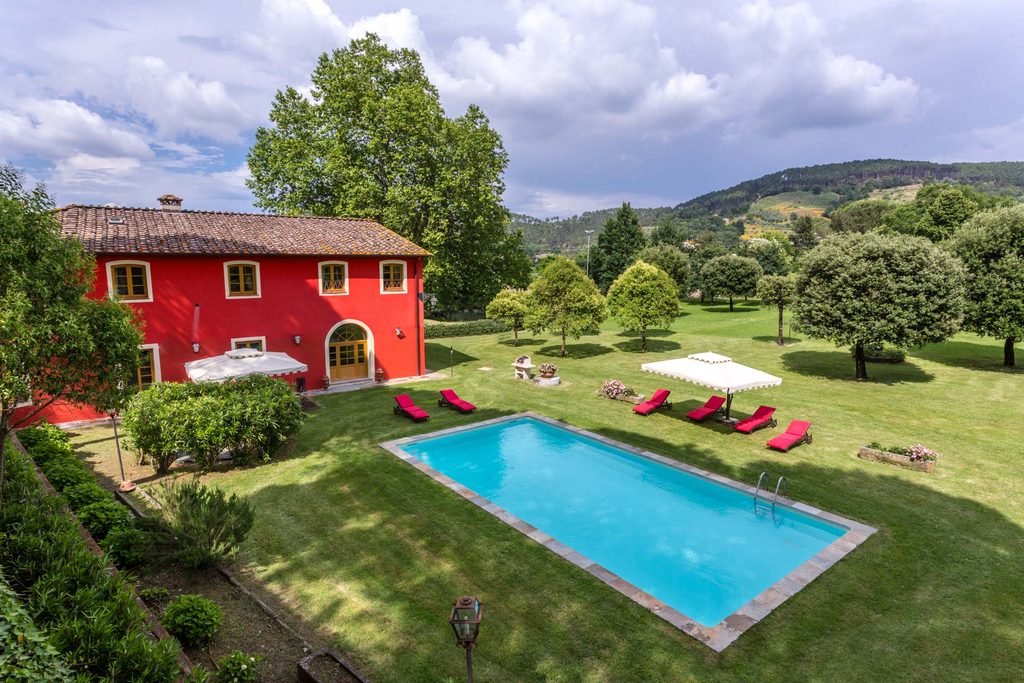
You do not even need to drive to start walking. From the village of Vorno, a few minutes from Lucca, a trail climbs past the church toward Monte Zano and on to the summit of Monte Faeta, where the view stretches from Livorno to the Gulf of La Spezia. It is a favorite of our guests at Casa Del Fattore, right in Vorno.
What to eat up the valley
The Garfagnana is the source of two of the ingredients that define Lucchese cooking: farro, the ancient spelt grown here for centuries and protected as Farro della Garfagnana, and chestnut flour, ground from the forests that once fed the whole valley through the winter. Order zuppa di farro for lunch, and in autumn look for necci, chestnut crepes with ricotta, at village festivals. Add biroldo, the local blood sausage, and pecorino from mountain flocks. More in what to eat in Lucca.
Plan your day
- Start early and head north on the valley road, stopping at the Devil’s Bridge first.
- Choose two or three stops. Barga, Castelnuovo and the Grotta del Vento make a full day. Bagni di Lucca works well on a shorter outing.
- Combine with Puccini. The family’s ancestral home at Celle dei Puccini is in the hills above Pescaglia. See Puccini’s Lucca.
- Go in late spring or autumn for green hills, chestnut season and cool mountain air. Summer works beautifully too, with river swimming and village festivals.
For more ideas beyond the valley, from Pisa to the Cinque Terre, see our 12 day trips from Lucca.
Where to stay
Our villas in the hills around Lucca put you within easy reach of the Serchio Valley while keeping the walled city close for dinner. Browse our villas near Lucca, read where to stay in Lucca, or let us plan your week, guides included.
Frequently asked questions
How far is the Garfagnana from Lucca?
The Devil's Bridge at Borgo a Mozzano is about 25 minutes north of Lucca, Barga about 45 minutes, and Castelnuovo di Garfagnana about an hour.
What is the Devil's Bridge near Lucca?
The Ponte della Maddalena at Borgo a Mozzano is a medieval stone bridge over the Serchio River, built around the turn of the 12th century and famous for its steep, lopsided arches and the legend that the devil helped build it.
Is the Garfagnana good for hiking?
Yes. Chestnut woods, mountain villages and the Apuan Alps make it one of the best walking areas in Tuscany, with routes for every level.