Travel Guide · Food & Wine
Lucca Wine Country: The Colline Lucchesi and Montecarlo
Tuscany's quietest wine country starts at the edge of the walled city. Where to taste, and what to pour.

Everyone knows Chianti and Montalcino. Far fewer people know that the hills around Lucca have been making wine since the Middle Ages, when their bottles were prized by the lords of Lucca, Florence and Pisa. Today the area has two small appellations, a cluster of family estates, some of Italy’s most respected biodynamic growers and a wonderfully unhurried pace. If you are staying in a villa near Lucca, wine country starts at the end of your driveway.
Two appellations, two characters
Colline Lucchesi DOC
The “hills of Lucca” appellation covers two stretches of slopes on either side of the city, reaching toward Pescaglia and Massarosa in the west and toward Capannori, Porcari and Villa Basilica in the east. The reds are built on Sangiovese, softened with Canaiolo and Ciliegiolo and sometimes a touch of Merlot, which does well in the local clay and gravel soils. The whites blend Trebbiano with Vermentino, Malvasia and Greco, and sometimes Chardonnay or Sauvignon. They are fresh, food-friendly wines made for long lunches, and among the best value in Tuscany.
Montecarlo DOC
East of Lucca, the tiny hill town of Montecarlo, founded in the 14th century around its fortress, has its own appellation and an unusual history. In 1870 a local estate owner brought Sauvignon, Sémillon, Merlot and the Cabernets back from Bordeaux, and French varieties have been part of Montecarlo’s identity ever since. Its white blends Trebbiano with grapes like Sémillon, Pinot Bianco, Sauvignon and Vermentino. The reds pair Sangiovese with Canaiolo and a share of Bordeaux grapes. Montecarlo Bianco was recognized as a DOC in 1969, the Rosso followed in 1985, and both are well worth seeking out.
The village itself is a pleasure: medieval walls, a fortress, the tiny 18th-century Teatro dei Rassicurati, one of the smallest theaters in Italy, and terraces looking out over the plain. It is about 20 minutes by car from Lucca.
The most fun way to get there: a vintage Fiat 500
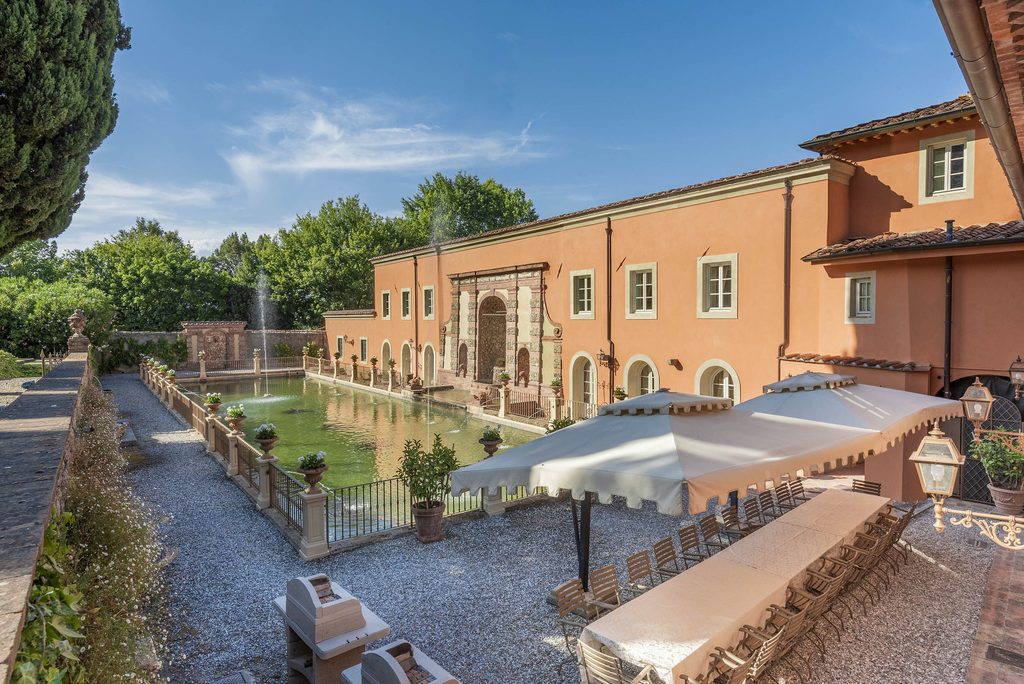
Guests at the Coselli Estate can explore this countryside behind the wheel of a classic Fiat 500, following a local guide in a little convoy. The day starts at the Parco delle Parole d’Oro, where the 19th-century architect Lorenzo Nottolini’s neoclassical aqueduct once carried spring water to Lucca, then winds through olive groves and vineyards to Montecarlo for a tour of the fortress and the Rassicurati theater. It ends at a family farm with an olive oil demonstration and a wine tasting over a light Tuscan lunch. The outing takes about five hours and runs with at least three cars, three people per car, so it suits a group of friends or two families traveling together.
Wineries to visit
Most estates here are family run and welcome visitors by appointment, which means you will often be poured wine by the person who made it. A few we like to suggest:
- Tenuta di Valgiano, Valgiano. One of the pioneers of biodynamic farming in Italy and the estate that put the Colline Lucchesi on the map for serious wine lovers. Visits are by reservation.
- Fattoria Sardi, Monte San Quirico. A biodynamic estate just outside the walls with tastings, tours and a seasonal restaurant.
- Tenuta Maria Teresa, Pieve Santo Stefano. An 18th-century villa estate producing wine, olive oil and honey, with tastings by appointment.
- Fattoria di Fubbiano, San Gennaro. A historic estate known for its award-winning olive oil as well as Colline Lucchesi wines.
- Tenuta Lenzini, Gragnano. A family estate that hosts a summer festival of music, theater and food in August.
- Fattoria del Teso, Montecarlo. Tastings of Montecarlo wines and local products, by reservation.
- Tenuta del Buonamico, Montecarlo. One of the larger Montecarlo estates, with vineyard and cellar tours and tastings of wine and oil.
Back in town, Enoteca Vanni in Piazza del Salvatore keeps tens of thousands of bottles in medieval cellars and is the best place to taste your way across the region, or to ship a case home.
Olive oil, the other harvest
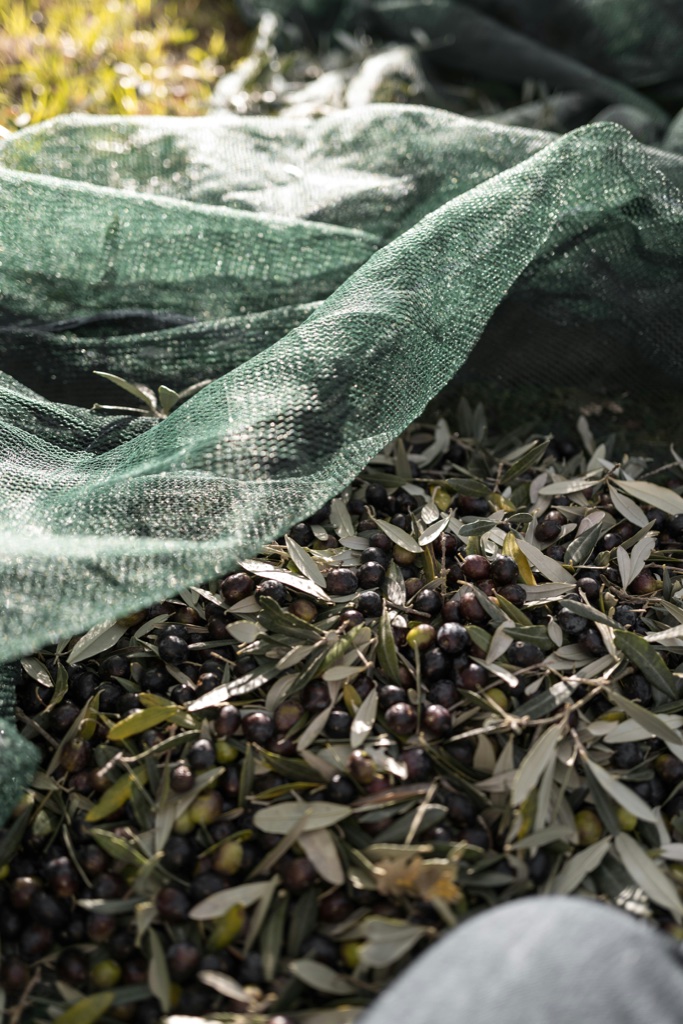
The same hills produce Lucca’s prized extra virgin olive oil, gentler and more golden than the peppery oils of central Tuscany. Many estates sell oil at the door, and in late October and November you can taste the olio nuovo straight from the press. To join in the picking, read our guide to the olive harvest in Italy.
Tips for tasting around Lucca
- Book ahead. Small estates rarely have a tasting room open all day. Call or email a few days in advance, or let us arrange it.
- Designate a driver, or hire one. The roads are narrow and winding. We can arrange a private driver and guide for a tasting day.
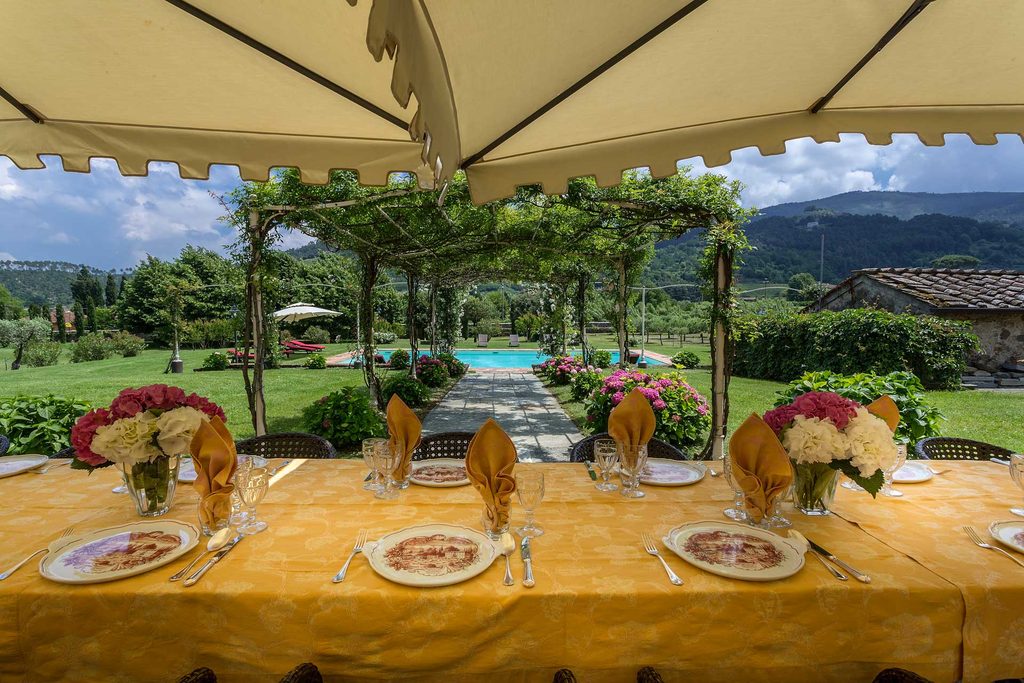
- Or let the wine come to you. If you would rather not leave the pool, a private sommelier can bring a selection of local wines to the villa and pair them with Tuscan dishes.
- Pair it with a garden. Many wineries sit near the historic villas of the Lucchesia, so a morning in the gardens and an afternoon of tasting make an easy day. See the villas and gardens of Lucca.
- Time it with the harvest. The grape harvest usually begins in September, and October brings new oil. See the best time to visit Lucca.
- Ask about shipping. Many of these wines are hard to find at home. Some estates and wine shops can arrange shipping to the United States, so ask before you fill the trunk.
For tips that apply across Tuscany, from reading labels to shipping wine, see wine tasting and buying in Tuscany.
Stay among the vines
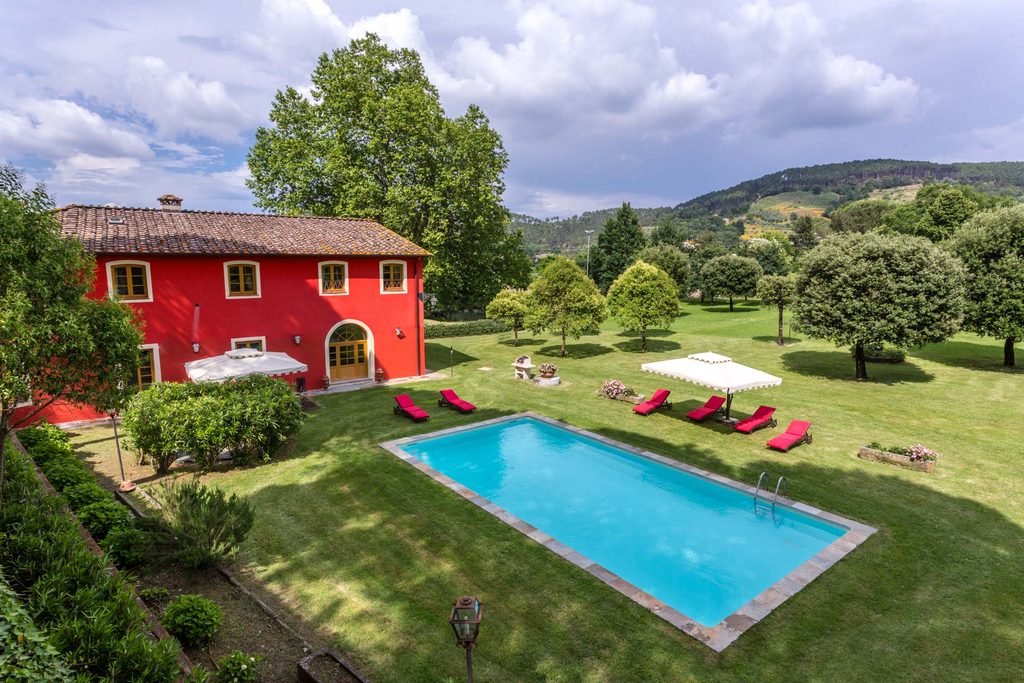
Several of our villas sit in the Colline Lucchesi, surrounded by vineyards and olive groves and minutes from the walls. At the Coselli Estate in Capannori, the concierge arranges winery tours in the nearby hills, and Casa Del Fattore pairs village life in Vorno with a private chef who can match dinner to the bottles you bring home. Browse all our villas near Lucca, or ask us to plan a wine week, tastings and driver included.
Frequently asked questions
What wine is made near Lucca?
Two appellations surround Lucca: the Colline Lucchesi DOC, with Sangiovese-based reds and Trebbiano, Vermentino and Malvasia whites, and the Montecarlo DOC, known for blends that include French varieties like Sémillon, Sauvignon and Merlot.
Do you need to book wine tastings near Lucca?
Yes. Most estates are small and family run and welcome visitors by appointment, so book a few days ahead or ask us to arrange it.
How far is Montecarlo from Lucca?
The hill town of Montecarlo is about 20 minutes by car east of Lucca.