Food & Wine
The Olive Harvest in Italy: Three Weeks That Become a Year of Better Cooking
Late October, early November. The week of the year when every farm in Tuscany and Umbria is briefly the most important place in Italy.
I’ve just come home from the harvest in Umbria, and I’m still tasting it. There’s a small bottle of new oil on my kitchen counter, the colour of cut grass with a bronze edge to it, and every time I put it on a piece of unsalted Tuscan bread my throat catches at the back in that good way that only oil pressed within a week of picking can do. The bottle will be empty by January. The trip, I find, lasts much longer.
The olive harvest in Italy is one of those experiences that travel writers tell you about in October articles you read in February and then forget. I think we forget it because it sounds like work. The whole picture is wrong. It is not a labour exchange — it is a four-hour morning in a grove with a rake, followed by a lunch in the press house that you will think about for years. It is also, for about twenty days a year, an actual thing you can plan around.
Why no one talks about it
Because the harvest is set by the olives, not the calendar. Estate owners get a forecast in late August, refine it in September, and call us about three weeks before they begin. We sometimes end up with one week to confirm a villa. That’s why most people miss it: by the time you’re researching “when is the olive harvest in Italy” online, it’s already started somewhere.
In central Italy — Tuscany and Umbria, where most of our groves are — the harvest is almost always the last ten days of October and the first ten of November. The south (Puglia, parts of Sicily) starts mid-October. The north (around Lake Garda) runs into early December. The year matters too: a hot dry summer brings everything forward, a wet one pushes it back. Two of our estates in Umbria had their pickers in the trees the second week of October last year. The year before, the same trees waited until November.
The trick, then, is to come for the trip, not the date. Pick the ten days that work for your life and we will tell you which estates will be pressing then.
Where it happens
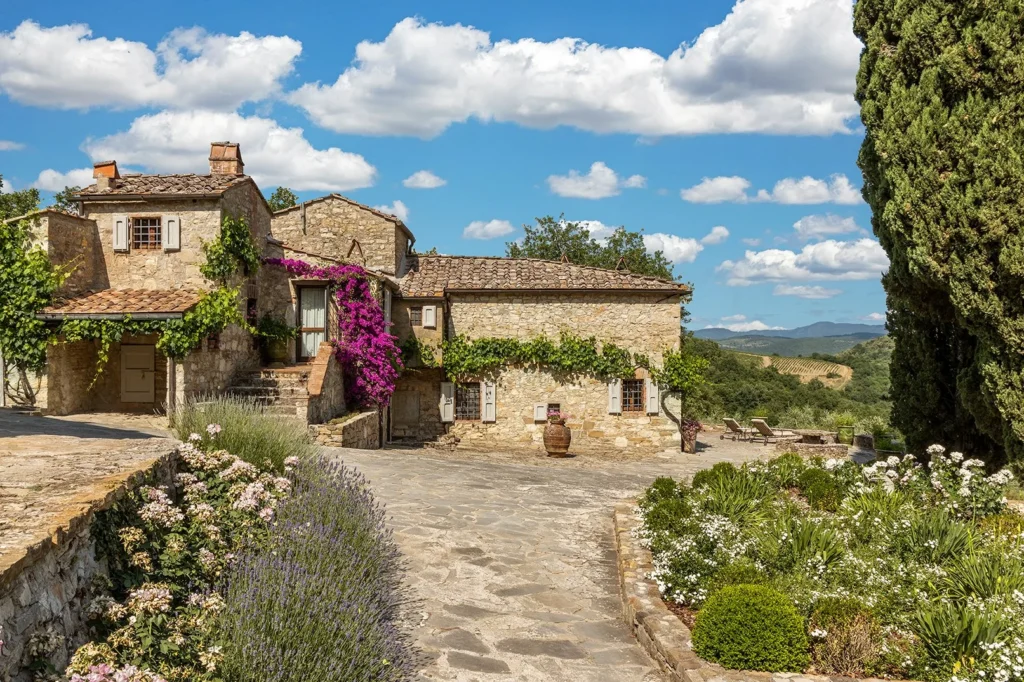
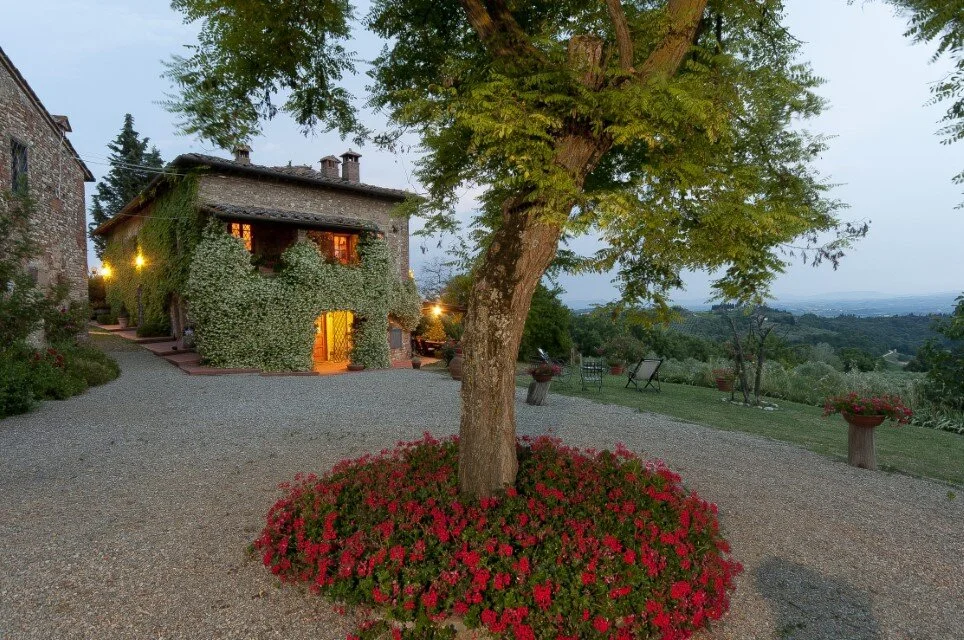
Most of our Chianti and Umbrian villas are on working estates with their own grove and, in many cases, their own frantoio — the press where the olives are turned into oil within hours of being picked. A few of them open the gates to guests during the harvest itself. Some let you join in the grove for a morning. A few host an oil-tasting dinner in the press house, with bread and a glass of last year’s vintage to compare, so you can taste the year in your mouth.
I keep going back to one estate above Perugia where the press is in a converted stone barn behind the main house. The first time I went, the owner walked me through it in maybe ten minutes — olives in, paste through, centrifuge, oil out — and then handed me a piece of unsalted Tuscan bread, dipped it in the spout, and told me to taste before he said anything. It was unforgettable. The oil was warm, peppery, almost grassy. I made a sound. He laughed and said “Yes, that’s what it does.”
I went home with four bottles I had not budgeted for. So will you.
What the morning actually looks like
If you are joining a harvest day, here is what to expect, written by someone who has just done it.
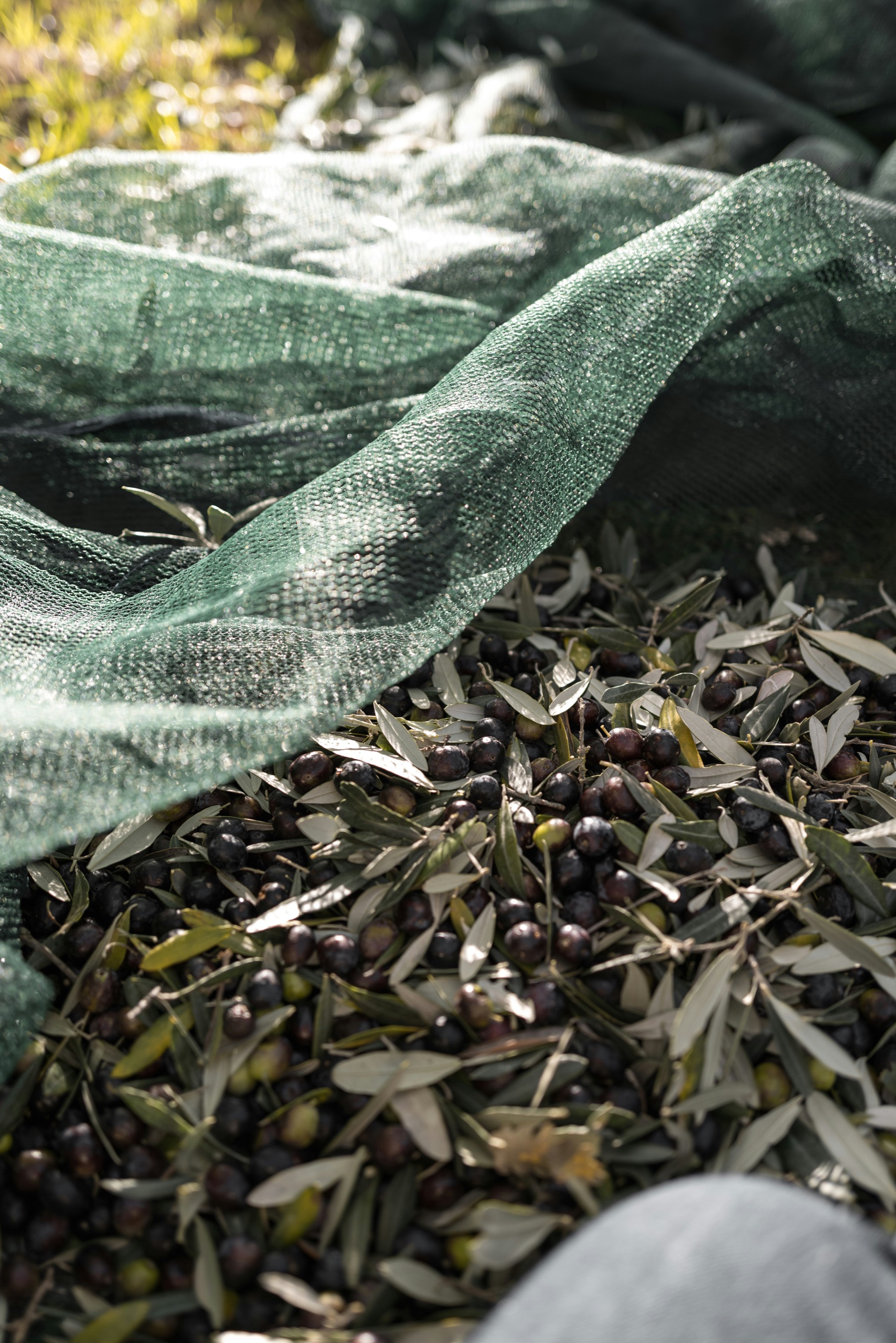
You arrive at the grove by mid-morning, after coffee at the villa. Someone hands you gloves and points at the nets, which are already laid out under the trees in a wide overlapping skirt. The picking itself is gentle: you knock the olives down with a small rake — a pettine, the Italian word means comb — and they fall into the nets in soft pattering bursts. Some people prefer to pull them off by hand, one branch at a time, but it takes much longer and after twenty minutes your shoulders begin to disagree.
Three or four hours is enough. The bags of olives are weighed, sorted, and loaded into the back of the van. Most estate frantoi are within five minutes’ drive of the grove. You walk in, the air smells of grass and pepper and crushed tomato leaves, and the olives you picked become oil before you have finished your second espresso. There is no part of this process that you will think is overrated.
The lunch
This is the part nobody tells you about, and the part I cannot stop thinking about.
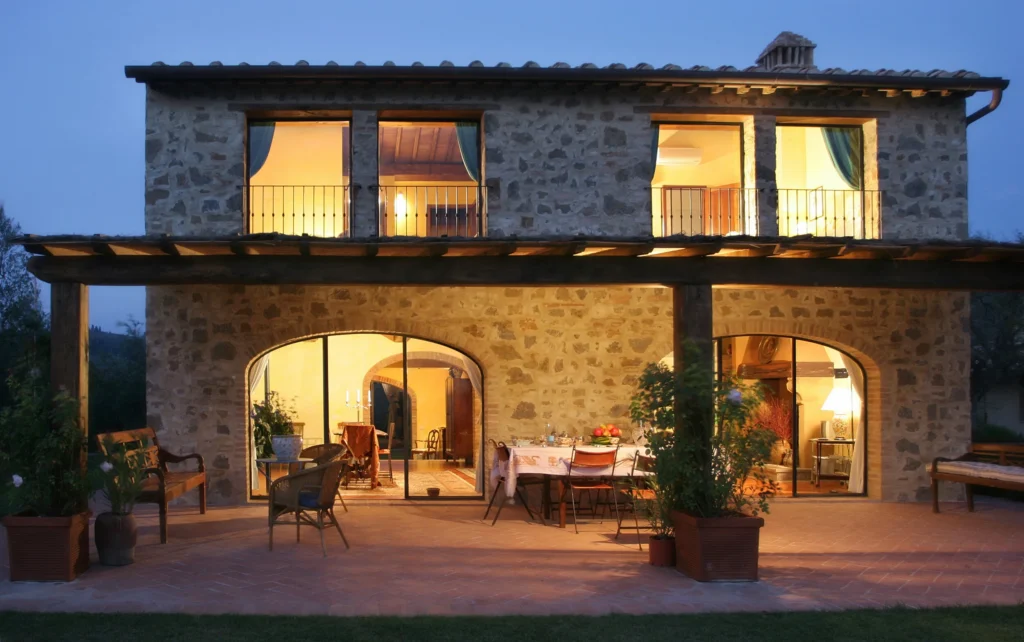
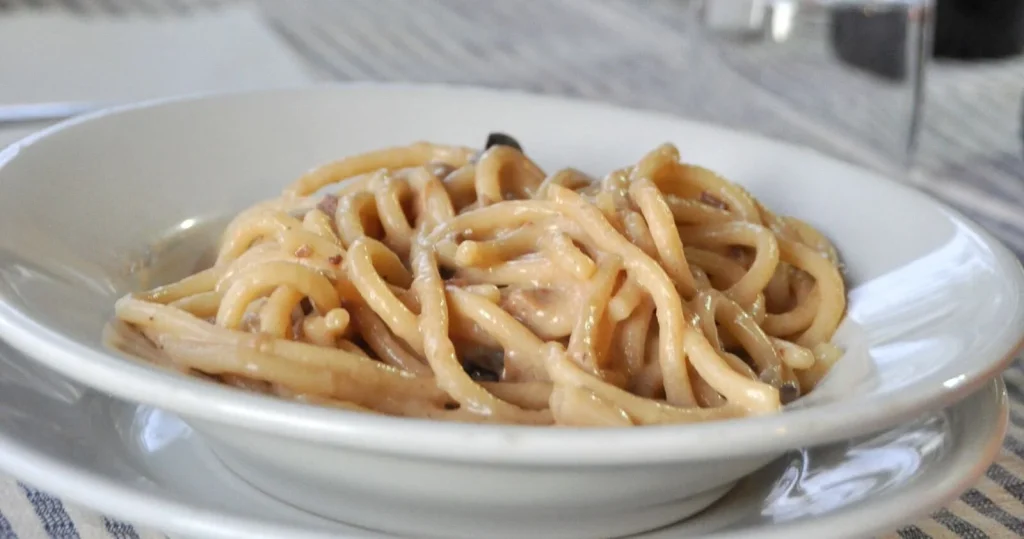
Whichever estate you pick will almost certainly feed you afterward — a long table in the kitchen of the manor house, or outside on the terrace if the November sun is generous, with three or four courses of food that has been alongside that oil for a long time. The bread. Roast vegetables in a slick of new oil. A simple bowl of pasta with garlic, chili and a finishing pour at the table. Always a salad of bitter winter greens with the new oil and nothing else. Always a small bowl of the same oil with a piece of bread for anyone who wants to keep tasting between courses, because, as one estate owner told me, “it changes every hour for the first week.”
I have eaten this lunch four years running. I will eat it again in October.
Beyond the harvest
Late autumn in central Italy is genuinely beautiful, and almost nobody who hasn’t been there in November believes it. The trees turn gold and rust. The morning air is sharp enough to need a sweater but the midday sun is still warm. The hill towns are empty of summer crowds — Cortona, Pienza, Montepulciano, Spello, Spoleto, all unrecognisable from their July selves. The restaurants pivot to truffle and porcini. The thermal springs at Saturnia and Bagno Vignoni are at their best because the air around them is cold and the water is still hot enough to steam.
If you have not done an October–November trip to Tuscany or Umbria, this is the one to plan first. The olive harvest is the spine. The truffle hunt is the side trip. The slow afternoons in empty hill towns are the reward.
What you take home
A bottle, of course. Always a bottle. Sometimes four. They make it through customs in the checked bag if you wrap them in clothes; we have never lost one.
But the better thing you take home is the calendar your kitchen becomes for the next year. The bottle on the counter is a reminder that you were there. Every meal you finish with the new oil is a small trip back to the grove. By January it’s down to the last quarter. By March it is gone, and the salad you eat that night is the moment you start counting the months until the next harvest.
It is, hands down, the trip I tell our most repeat clients to plan when they say they have already seen Italy. Italy is not done with you. You have not yet tasted October.
Stay on a working estate during harvest
If you want to be on a working olive estate during the harvest, we have eight villas in Tuscany and Umbria with their own grove and frantoio, and a few more whose owners take guests along to a neighbour’s. We watch the forecast every August. We will tell you which ten days we think you should hold, and which villa is in the right grove for you. Get in touch and we will start the planning.