Private vineyard tour and tasting
A morning at a small Chianti Classico producer — Castello di Ama, Felsina, Fontodi, or a family estate without a sign on the road. Cellar tour, four wines, and lunch with the winemaker.
Classic Tuscany
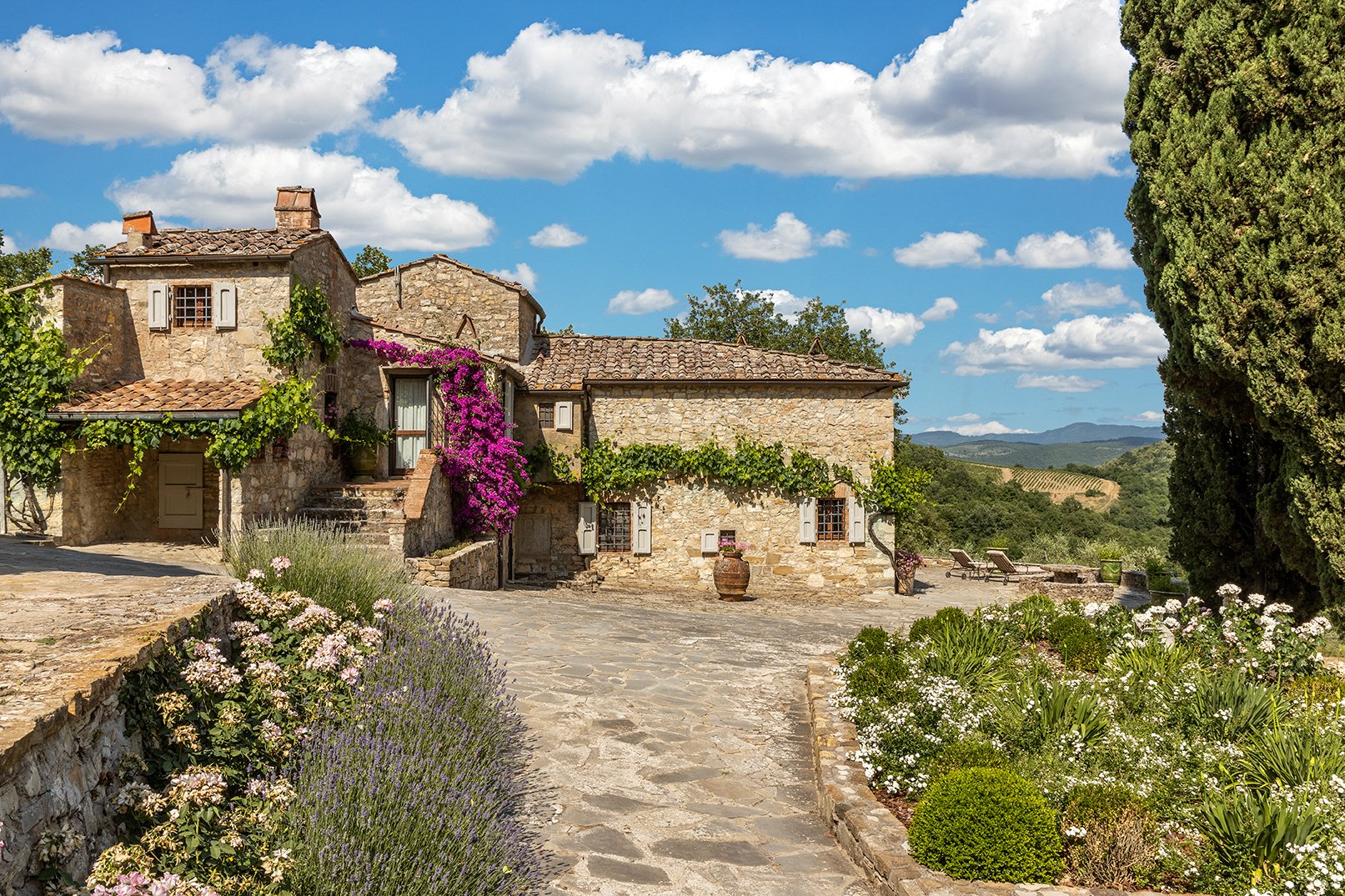
Cypress-lined drives, family vineyards at golden hour, and a glass of Sangiovese with the hills going pink.
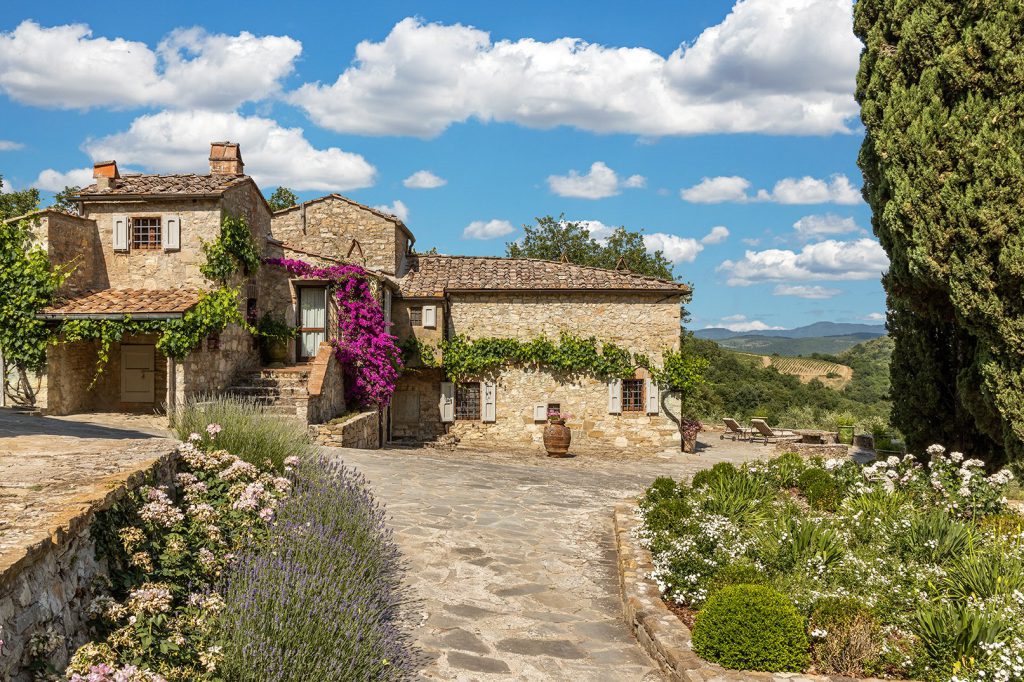
The Chianti hills between Florence and Siena are the Tuscany of the postcards — for good reason. Cypress-lined gravel roads, stone farmhouses behind iron gates, and family vineyards that have been making wine for ten generations.
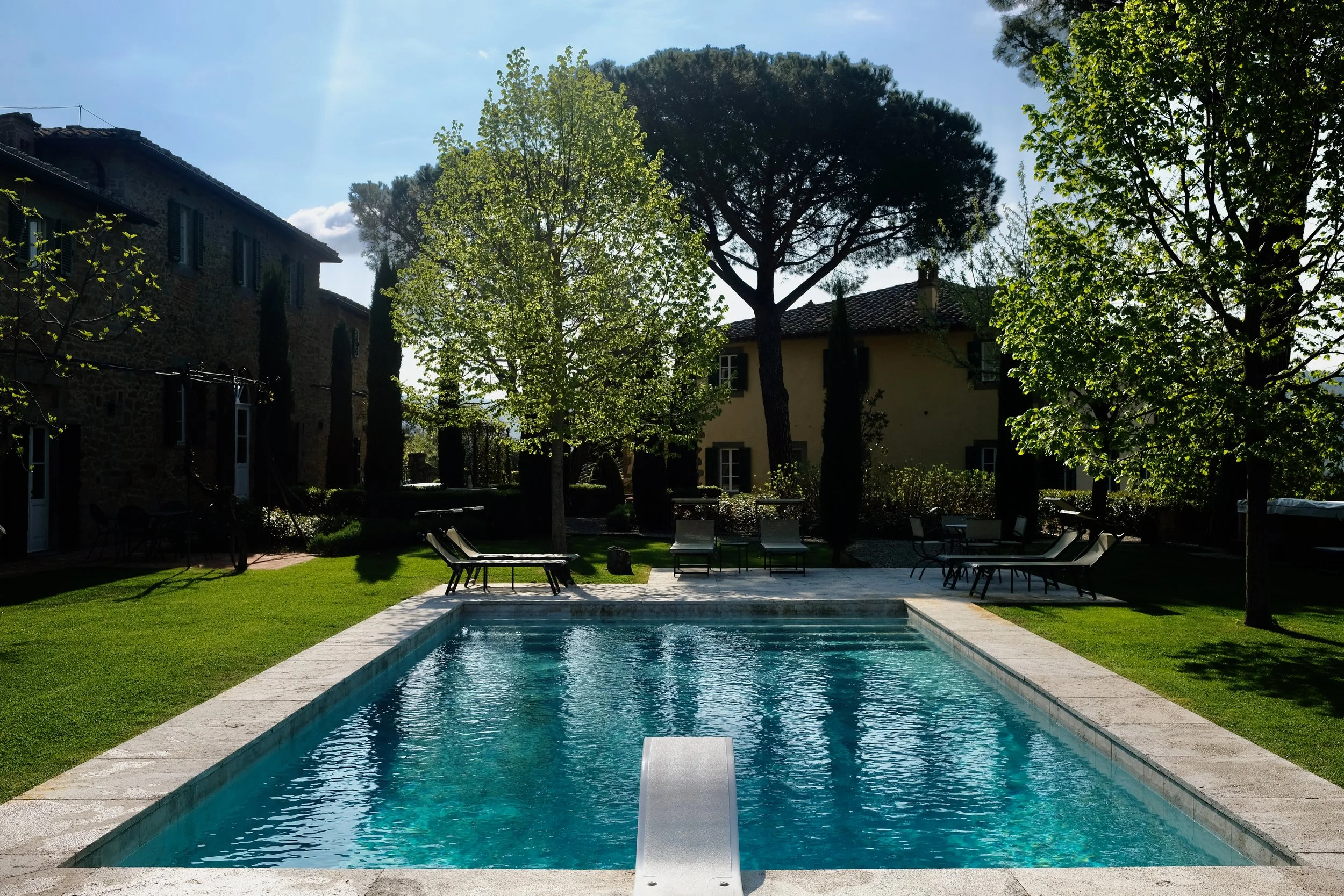
Stay in a villa here and the day finds its own rhythm. Morning coffee under a pergola, a long lunch at the winery you can see from your bedroom window, a swim in your own pool, dinner driven down to Greve or Panzano or eaten at the kitchen table with what your chef bought at the market that morning.
Want a base nearer the historic city? Our villas near Siena are forty-five minutes south.
Best Villas
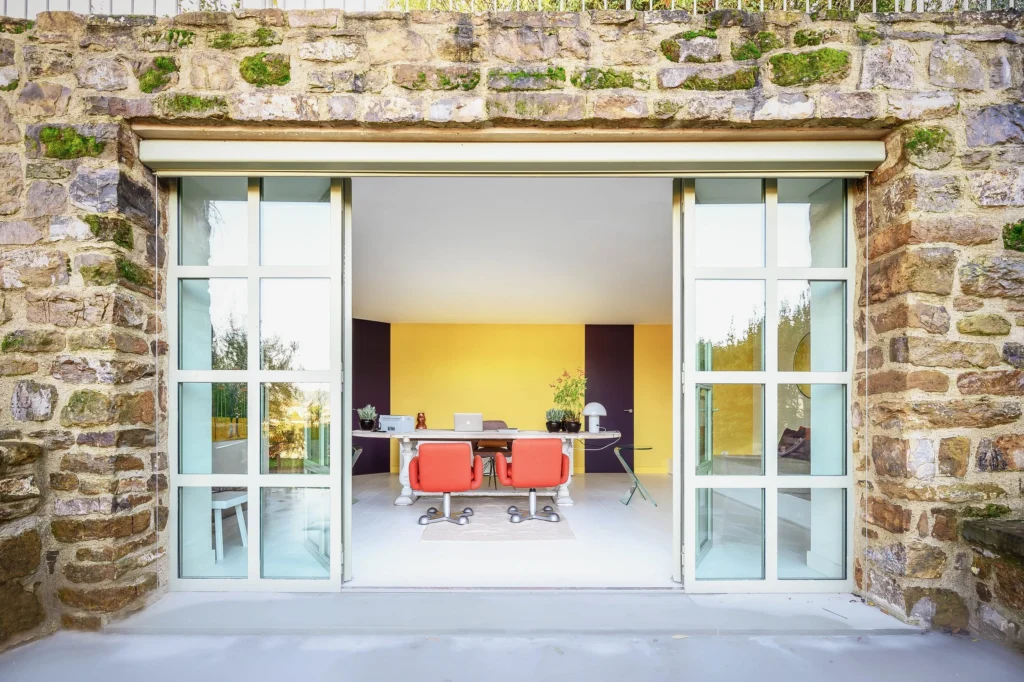
Chianti
3 Beds·3 Baths·6 Guests
From €15,300 / week
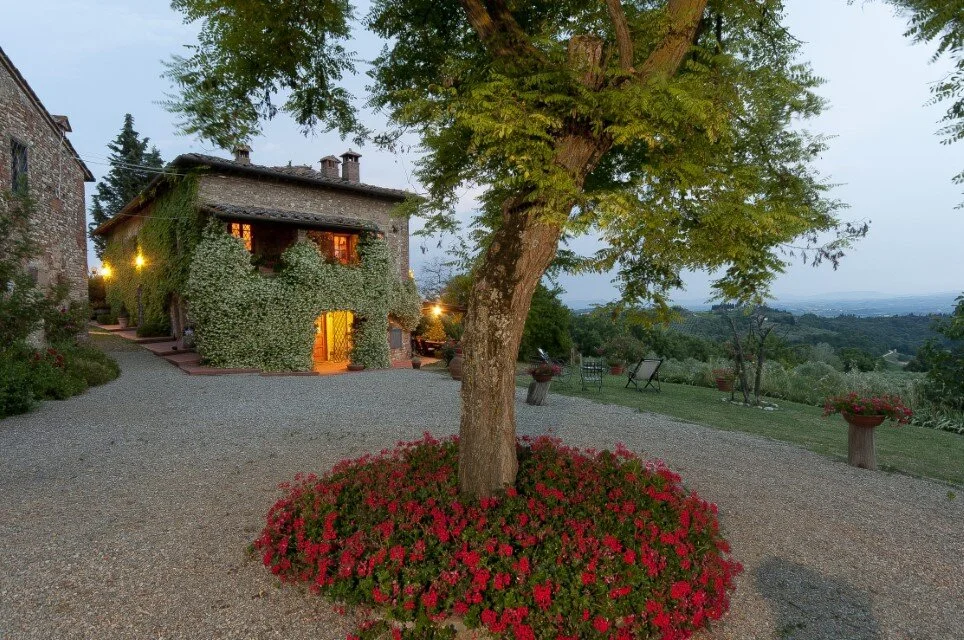
Chianti
5 Beds·6 Baths·10 Guests
From €7,060 / week
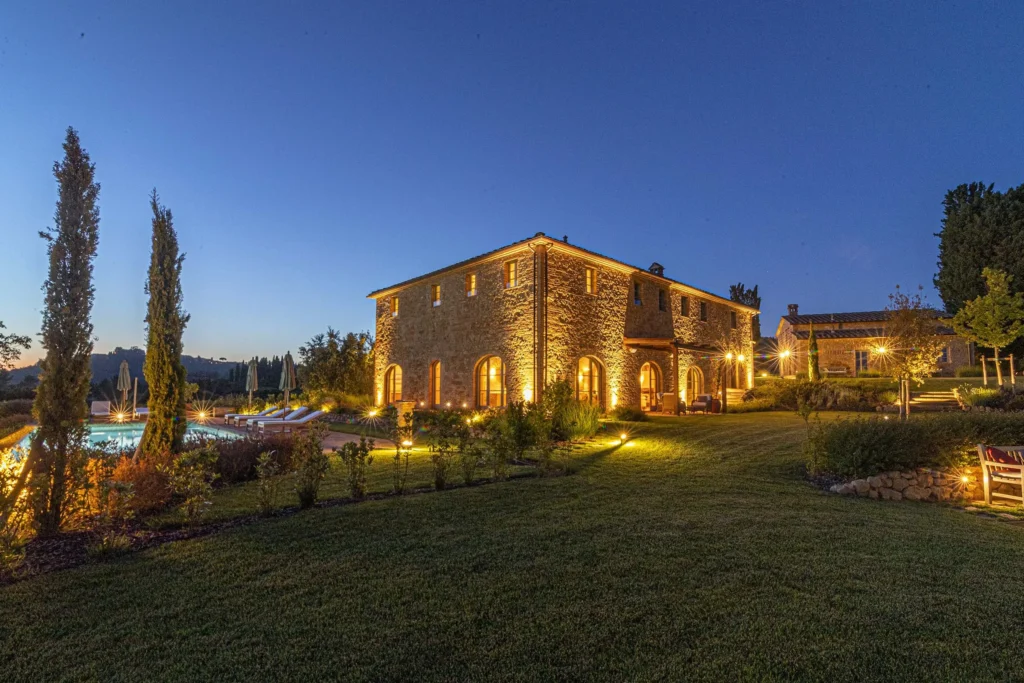
Chianti
5 Beds·5 Baths·10 Guests
From €11,415 / week
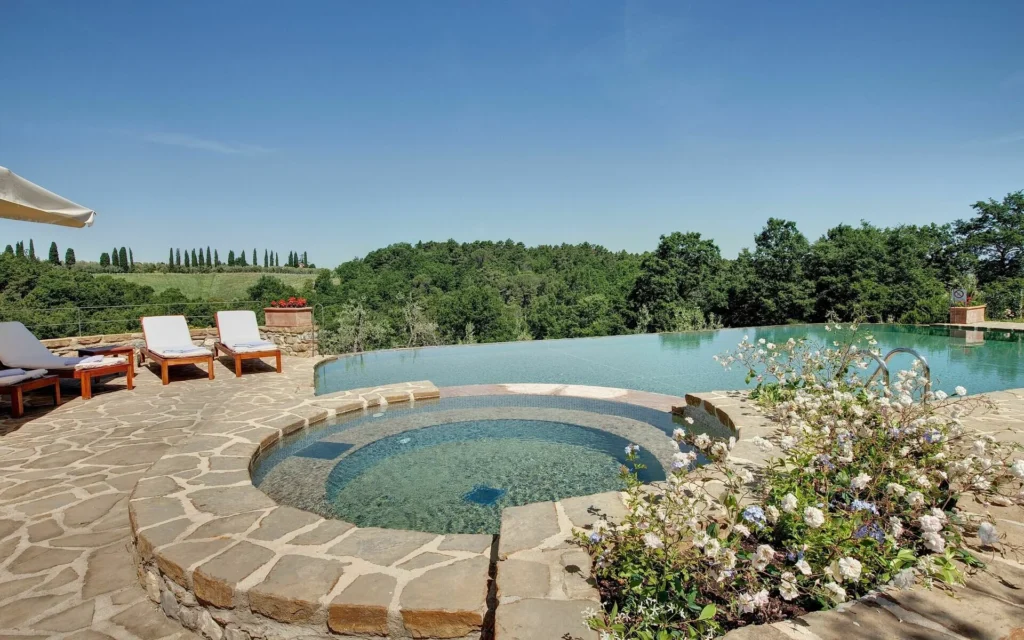
Chianti
6 Beds·7 Baths·12 Guests
From €13,230 / week
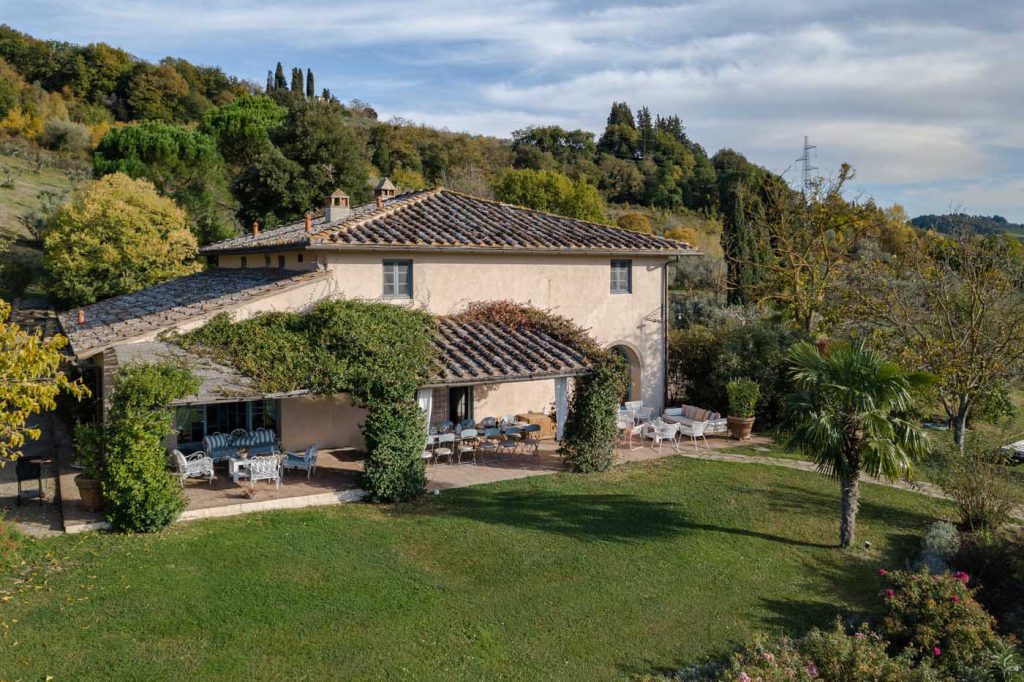
Chianti
6 Beds·6 Baths·12 Guests
From €6,855 / week
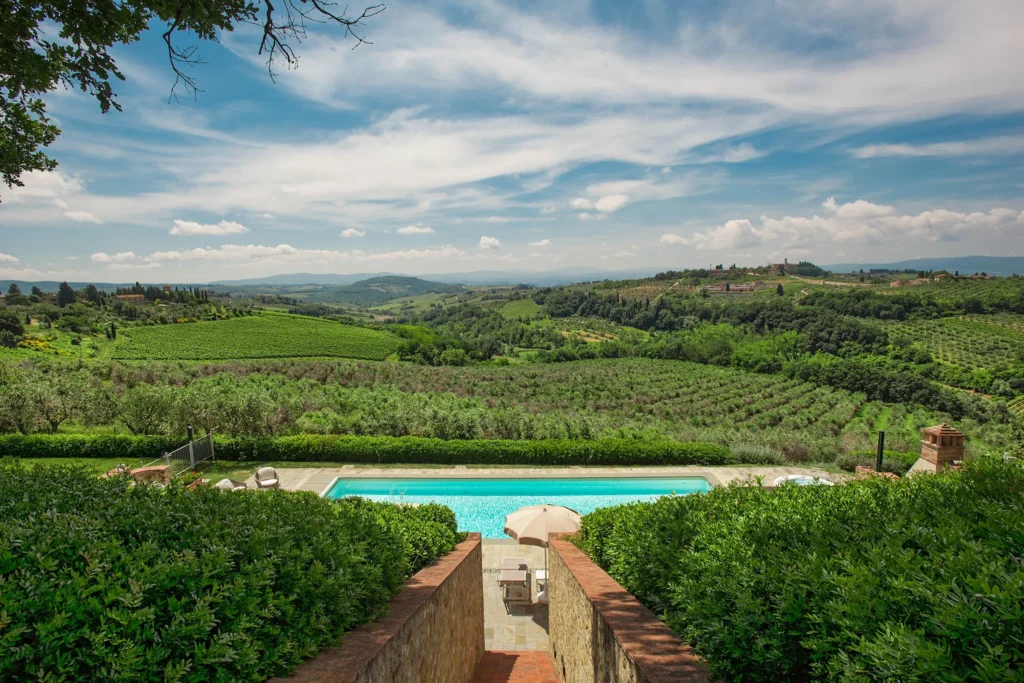
Chianti
6 Beds·5 Baths·12 Guests
From €8,855 / week
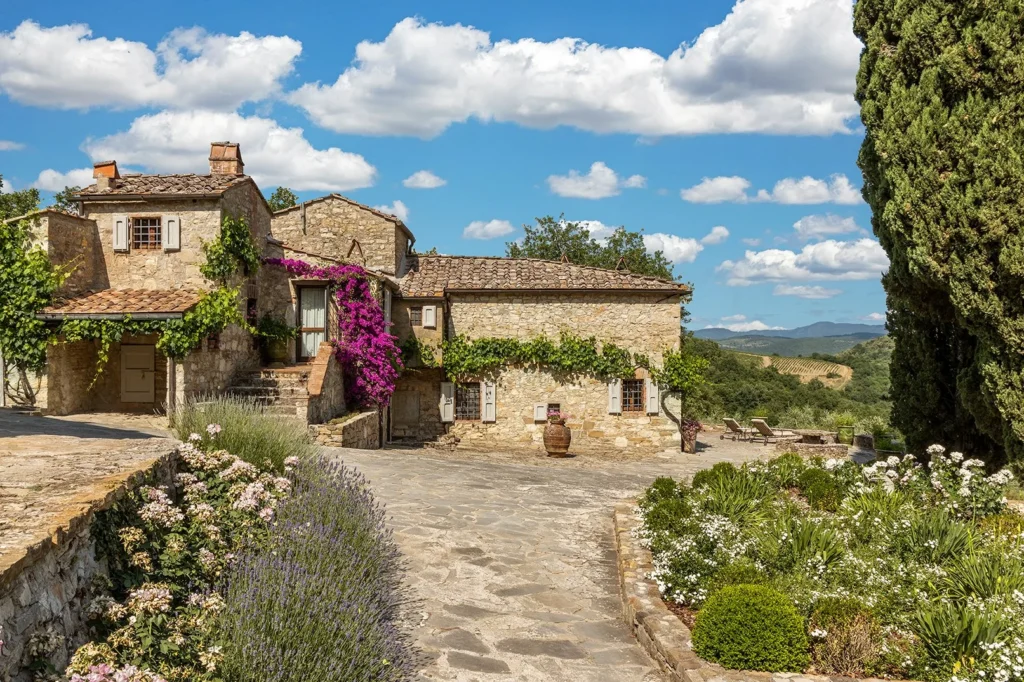
Chianti
7 Beds·7 Baths·14 Guests
From €30,560 / week
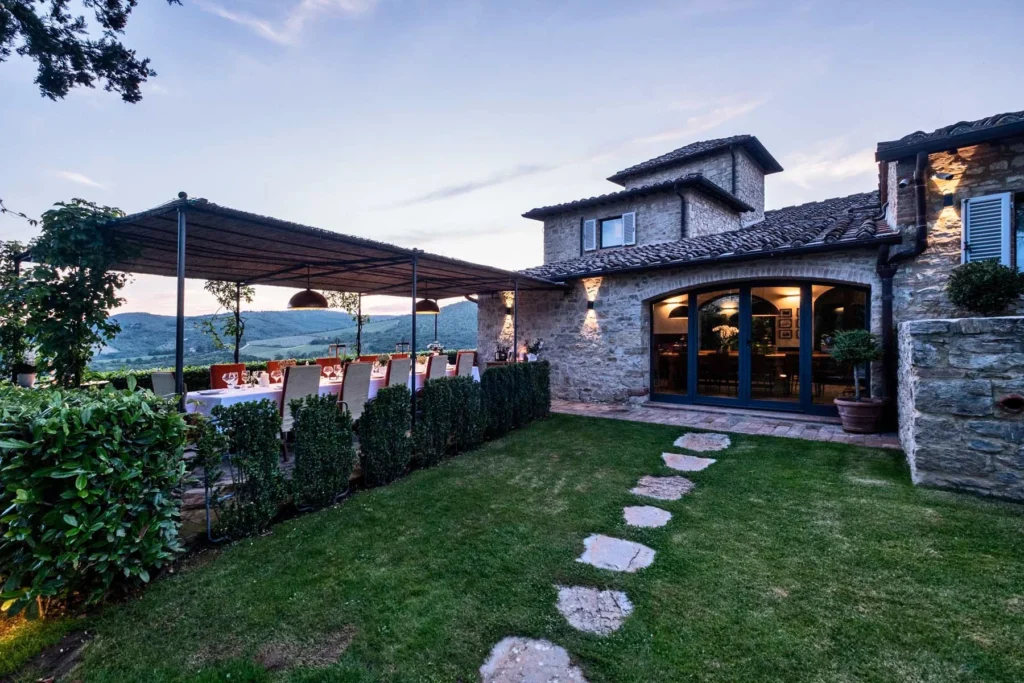
Chianti
7 Beds·7 Baths·14 Guests
From €19,895 / week
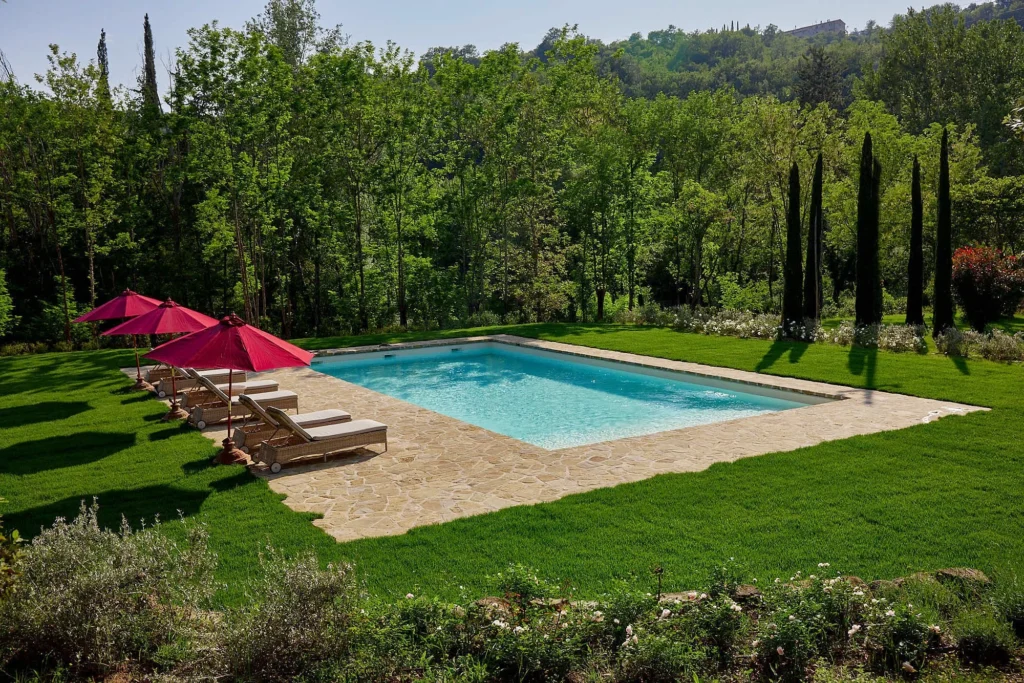
Chianti
7 Beds·6 Baths·14 Guests
From €28,570 / week
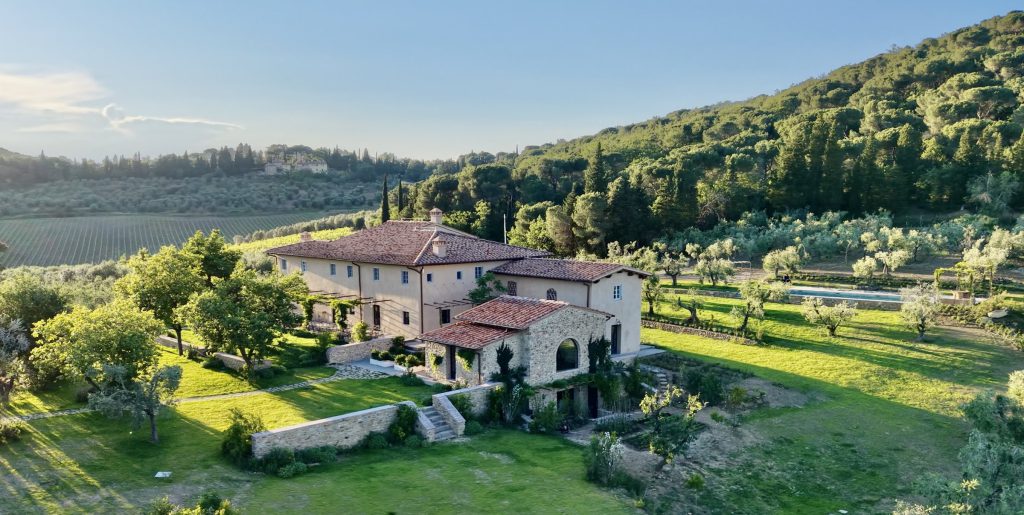
Chianti
8 Beds·8 Baths·16 Guests
From €19,200 / week
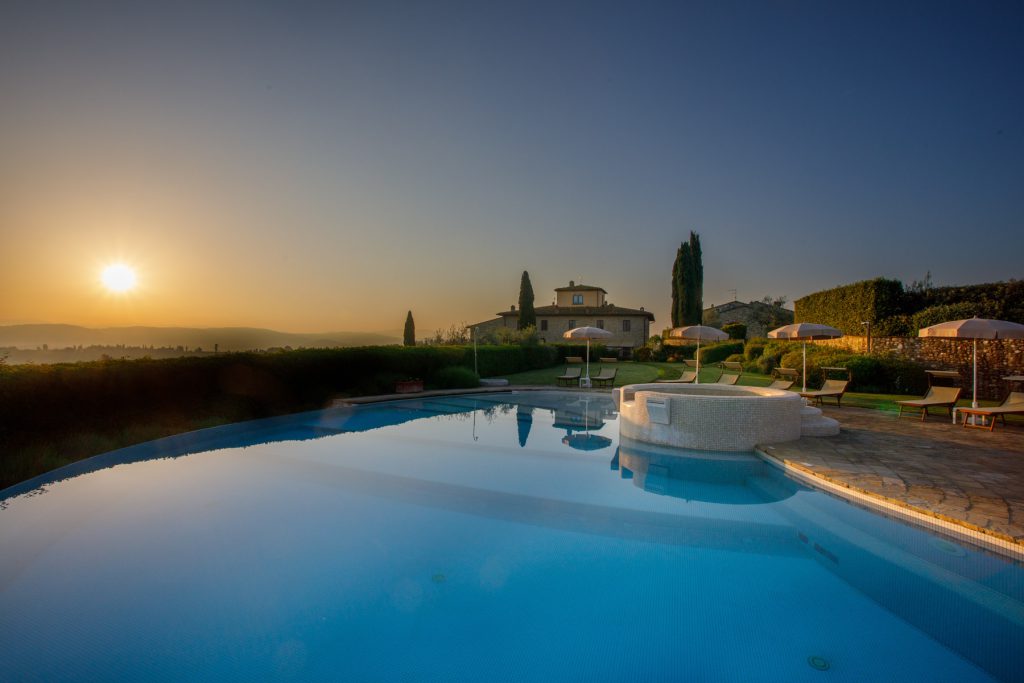
Chianti
8 Beds·8 Baths·16 Guests
From €11,460 / week
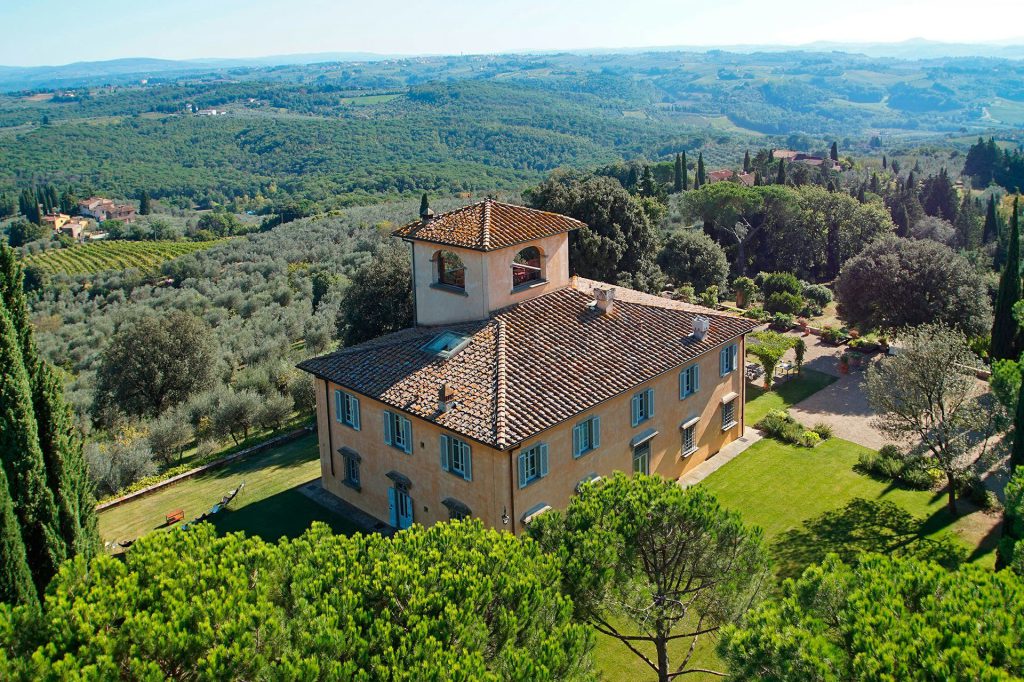
Chianti
8 Beds·7.5 Baths·16 Guests
From €32,000 / week
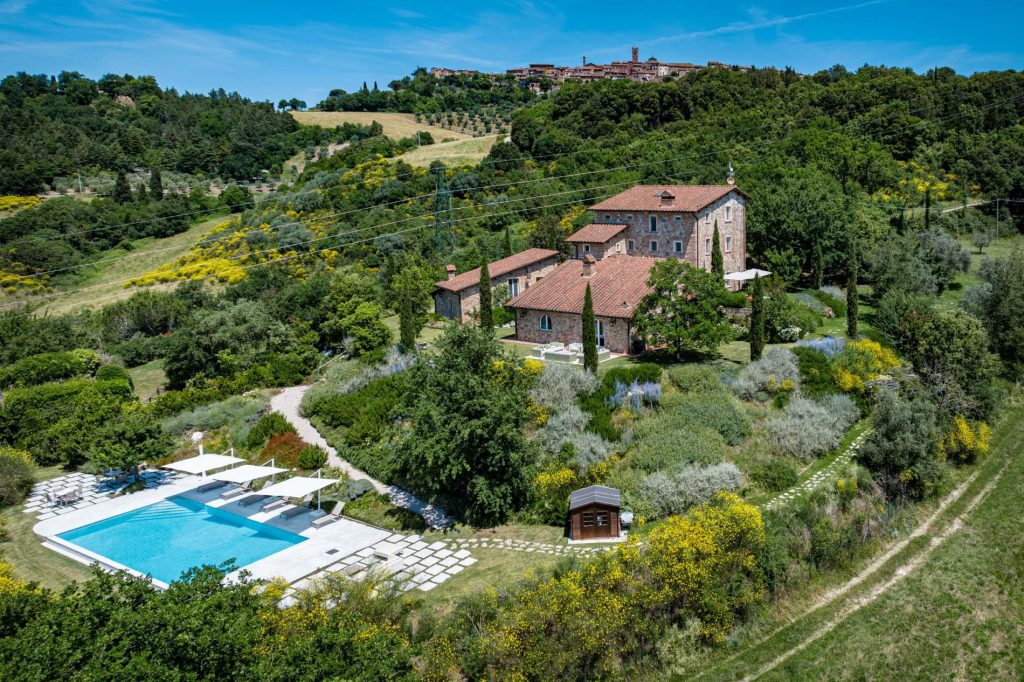
Chianti
10 Beds·10 Baths·20 Guests
From €15,000 / week
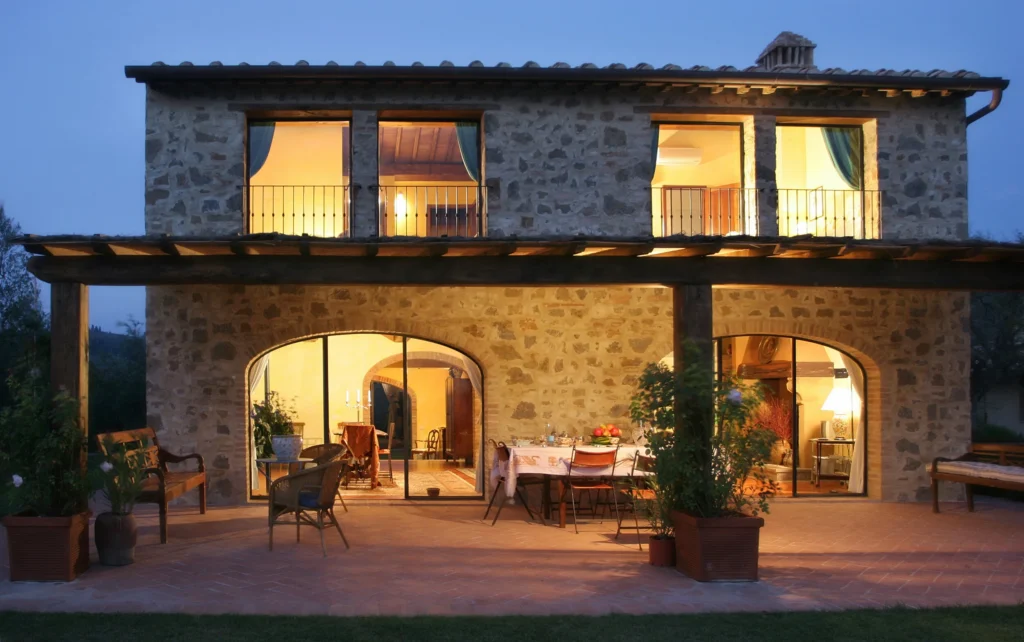
Chianti
12 Beds·11 Baths·22 Guests
Rates on request
Private experiences
Expert-led private tours with Context Travel, priced per group, so the cost per person drops the more of you there are. Book direct, with no markup.
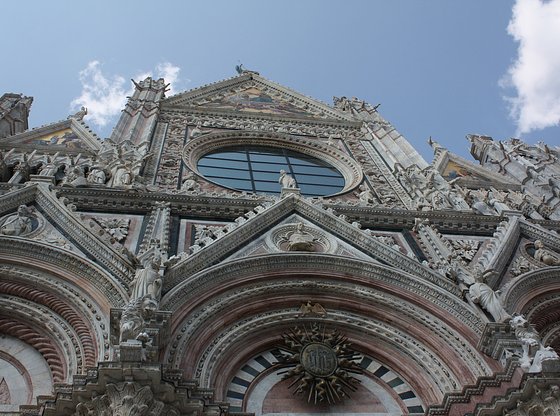 From$582 per person
Pienza, Montepulciano, the cypress road outside San Quirico, the abbey at Monte Oliveto Maggiore. The full Crete Senesi day with a local driver and a historian.
Private, priced per group: $2,572 for 2, about $582 per person for 6.
Book this experience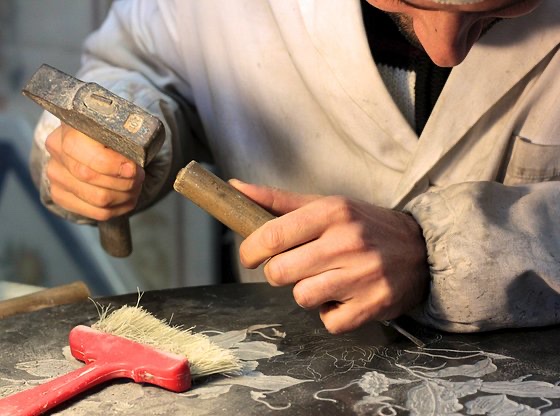 From$1,696 per group
Private tour: Chianti Excursion with Wine Tasting from Florence. Led by Context Travel's local expert in Florence.
Book this experience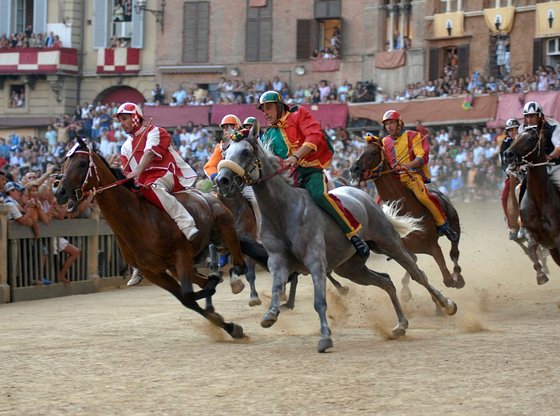 From$543 per person
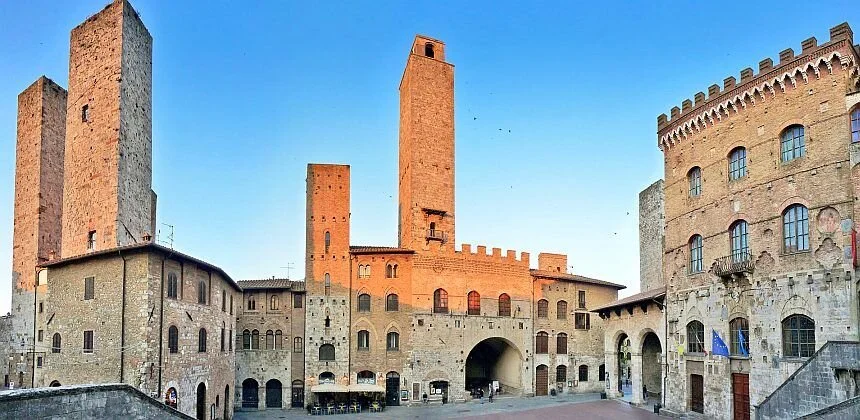
San Gimignano's towers, Volterra's Etruscan museum and alabaster workshops. The medieval-Etruscan double bill of the Tuscan hills west of Siena.
Private, priced per group: $2,494 for 2, about $543 per person for 6.
Book this experience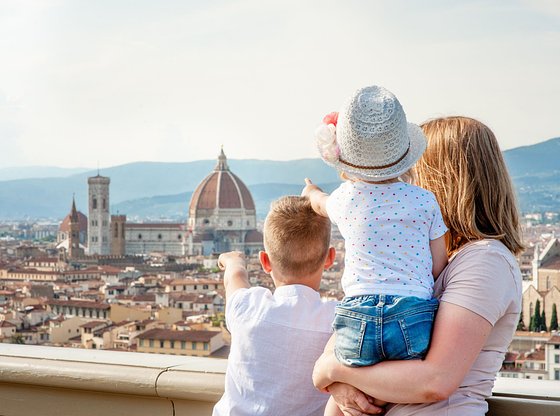 From$2,718 per group
Private tour: Full-Day Tuscany Day Trip from Florence with Wine Tasting. Led by Context Travel's local expert in Florence.
Book this experience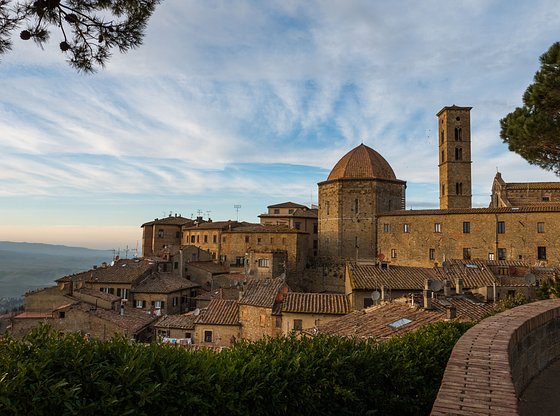 From$376 per person
Two cantinas in Chianti Classico, a long lunch between them, the SP408 road through the cypresses. A working-vineyard day, with a sommelier driver.
Private, priced per group: $1,764 for 2, about $376 per person for 6.
Book this experience From$1,557 per group
Private tour: Half-Day Tuscany Carmignano Wine Tasting Tour from Florence. Led by Context Travel's local expert in Florence.
Book this experienceDisclosure: experiences are delivered by Context Travel. Bookings made through these links may earn Doorways a referral commission, at no additional cost to you. Doorways does not mark up Context Travel pricing.
Experiences
A morning at a small Chianti Classico producer — Castello di Ama, Felsina, Fontodi, or a family estate without a sign on the road. Cellar tour, four wines, and lunch with the winemaker.
A nonna and a long wooden table. Fresh pici, ribollita, tiramisu, and a bottle of the house red. Half a day, ending with the meal you made.
An hour east toward Casentino with a truffaio and his Lagotto Romagnolo. Two hours of slow walking in the woods, then truffle pasta for lunch at the farm.
The two-lane road from Florence to Siena that threads through every postcard view of Chianti. Sixty kilometres, half a day if you stop for lunch, a whole day if you stop for tastings.
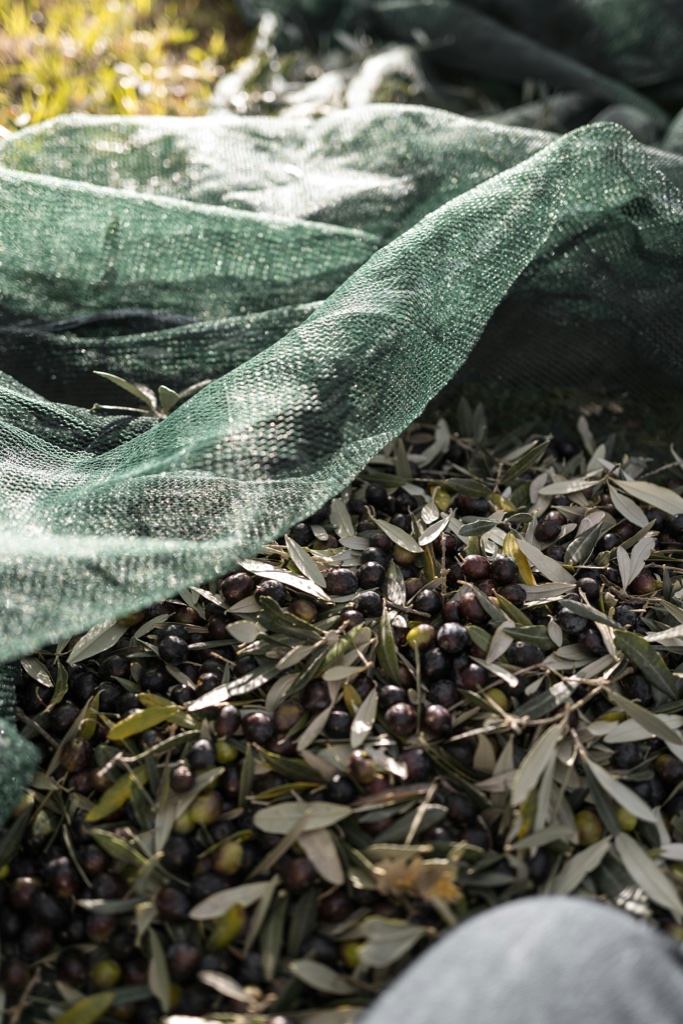
Late October and early November. Pick olives in the morning, watch them go into the press in the afternoon, taste the green-gold oil within hours of pressing.
Saturday and Tuesday mornings in Piazza Matteotti. Cheeses, cured meats, fresh ricotta, vegetables from the surrounding farms — the building block of every great Tuscan dinner.
Travel Advisor
From the right villa to private chefs, boat charters, and bespoke experiences, we take care of every detail.
Beyond the Villa
Forty-five minutes north. The Duomo, the Uffizi, dinner in San Frediano, and back to the villa by midnight. Tickets booked ahead, our driver waits.
Forty-five minutes south. The Campo, the Duomo, an hour in the Sant'Antimo or Crete Senesi just below, lunch at a trattoria your concierge knows.
The towers of San Gimignano in the morning, a saffron-pasta lunch, then Volterra's Etruscan walls and alabaster workshops in the afternoon.
An hour east. The Piero della Francesca frescoes in San Francesco, then dinner with Frances Mayes country views from Cortona's medieval centre.
Ninety minutes south to the most photographed valley in Italy. Pienza for pecorino, Montalcino for Brunello, Montepulciano for Vino Nobile.
A full day west. The Leaning Tower at dawn before the crowds, then Lucca for a bicycle ride around the walls and dinner in the centro storico.
Climate
| January | February | March | April | May | June | July | August | September | October | November | December |
|---|---|---|---|---|---|---|---|---|---|---|---|
| 50°F | 53°F | 59°F | 65°F | 73°F | 81°F | 86°F | 86°F | 78°F | 67°F | 56°F | 51°F |
Source: long-term monthly averages for the region. Sea temperatures stay comfortable for swimming May through October.
Where it is
Travelers Ask
Chianti is wine country, but that's only half of it. The region between Florence and Siena — the Chianti Classico zone, marked by the black-rooster Gallo Nero — is one of the most beautiful agricultural landscapes in Europe: cypresses, olive groves, oak woods, and roughly a thousand small wineries, most of them family-run.
The towns are tiny and unhurried. Greve in Chianti is the unofficial capital, with its weekend market in the triangular piazza. Castellina, Radda, and Gaiole are even smaller — stone villages on hilltops, with a single trattoria, a single enoteca, a single butcher (Antica Macelleria Cecchini in Panzano, the most famous in Italy). Volpaia is a medieval hamlet inside a working winery.
The food is essentially the food the contadini ate two hundred years ago, only better-sourced now: bistecca alla fiorentina, pici cacio e pepe, ribollita, pappa al pomodoro, pecorino di Pienza with chestnut honey. Lunch at a vineyard is the meal of the trip, every trip.
And the wine — Sangiovese-based, big, structured, made for food. The classic stops are Antinori in the Bargino visitor centre, Castello di Brolio (where the Chianti formula was invented in 1872), Castello di Ama for the modern style, Felsina, Fontodi, Querciabella. Our concierge books tastings at the producers that don't take walk-ins.
For Chianti we love May, June, and September — long warm days, settled weather, and the vineyards either in flower or full of fruit. July and August are stunning but hot (highs in the mid-to-upper 80s°F); August also coincides with Italian holidays so the smaller producers close. Late September through mid-October is the vendemmia — the wine harvest — and arguably the most beautiful time in Chianti: cool mornings, warm afternoons, vineyards turning gold, festivals in every village.
Chianti has a classic inland Mediterranean climate: hot dry summers and cool wet winters. Average monthly highs range from around 50°F in January to 86°F in July and August. May through September is reliably warm and sunny; pool weather is mid-May through late September. Spring and autumn are mild but can carry rain. Winter is grey, quiet, and a beautiful time if you want a fire in the villa.
Bistecca alla fiorentina (a three-finger-thick Chianina T-bone, served rare with olive oil), pici cacio e pepe, ribollita, pappa al pomodoro, fresh pecorino with chestnut honey, panzanella in summer, wild boar ragù in autumn. The famous addresses: Officina della Bistecca and Solociccia in Panzano (both Dario Cecchini), Osteria di Passignano at Antinori, Locanda di Pietracupa above Greve, La Bottega in Volpaia. Our concierge books any of them.
For a first visit: Antinori Bargino (the modern flagship), Castello di Brolio (history), Castello di Ama (modern art + wine), Felsina, Fontodi, Querciabella, Castello di Volpaia. For smaller family estates without signage we can arrange private visits — that's where Chianti is most itself.
Cooking classes with a nonna, truffle hunts with dogs, olive-oil tastings at the frantoio, market mornings in Greve or Panzano, cycling the hills (e-bikes are easy here), antique markets in nearby Arezzo (first Sunday of every month), and the Anghiari and Lucignano hilltop villages most travellers never reach.
Florence (45 minutes north), Siena (45 minutes south), San Gimignano and Volterra (one hour west), Arezzo and Cortona (one hour east), and the Val d'Orcia — Pienza, Montalcino, Montepulciano — about ninety minutes south.
Yes. Public transport in Chianti is essentially nonexistent — the small villages and the wineries that make Chianti worth the trip are all reached by car or by private driver. We arrange driver service for full days (vineyard tours, dinner out) and we recommend a small rental car for the villa stay itself so you can explore on your own.
Our Chianti villas run from about €7,000 a week for a five-bedroom farmhouse like La Novellina to about €32,000 a week for an eight-bedroom estate like Villa Tavernaccia. For couples, the cottages at La Poggiolaia start at €1,050 a week.
Villa Montosca sleeps 20, and the whole of La Poggiolaia sleeps 22. Villa Tavernaccia, Villa Chiara and Casa Bachicche each sleep 16, and Villa Amarika, Villa Colli and Villa Trionfante sleep 14.
Explore
Each region is hand-picked, walked, and slept in by us first. See which one is calling.
“A fabulous experience in every way. Thank you for all your help in working with us to choose the perfect villa and for all the recommendations. A trip to remember.”Doorways Client · Villa Larianella
“Our experience with Doorways was exceptional — La Casetta and The Farmhouse were impeccable, and the owners’ hospitality was off the charts. Two of the most magical properties in all of Umbria. Can’t wait to return!”Doorways Client · Sogno Casetta & Farmhouse
“My longtime dream of renting a villa with friends in Tuscany became a reality thanks to Susan and Doorways. Villa Laura was the perfect property — and Susan is trustworthy, professional, and passionate about her stunning properties.”Doorways Client · Villa Laura
“Awesome! Great central location and splendid views. A great, great place. This was my second time with Doorways and it was even better than the first!”Doorways Client · Poggio delle Rose
“We absolutely loved the villa on Lake Como. The local concierge devised a fabulous itinerary, and each of the services — provisions, chefs, tours on the lake — was exceptional. Our first time renting a villa, and we would highly recommend.”Doorways Client · Lake Como
“Phenomenal. The villa was a restful, beautiful place to stay, with spectacular views in Tuscany. Fresh herbs outside the door, a wood fire, more amazing views, and a quick dip in the pool. The four of us loved it — go, enjoy!”Doorways Client · Tuscany
“We couldn't have been better-taken care of! This was a very special experience — one that will be etched in our hearts forever.”Doorways Client · Villa Plaisir
“Three-sixty views over golden wheat fields and sunflower crops, a beautifully kept pool, an olive grove and fruit trees. And Mariela the housekeeper — what a wonderful person. The grounds, the views and the pool: magnificent.”Doorways Client · Villa Molinazzo
“I cannot speak highly enough of Doorways! Susan planned our stay and our wedding at Villa Laura in Cortona, and it was beyond our wildest dreams. Sophie the house manager gave us the best week of all our lives.”Doorways Client · Villa Laura · Wedding
“From arrival to departure, the week was filled with incredible hospitality, warmth and beauty. The description and photos did not do the experience justice. Xenia has created something truly special, and the Chianti hills were idyllic. Belissimo!”Doorways Client · Il Casolare
“Villa Mida is a delightful surprise — amazing water views, a unique indoor spa, attentive staff. After full days exploring the Amalfi Coast it was wonderful to return to a soothing setting to recharge. We can’t wait to return!”Doorways Client · Villa Mida
“This villa was amazing — everywhere you looked was a “wow” moment. Pool, hot tub, outdoor kitchen, king-size beds with double shower heads. Bocce, foosball, ping pong. Thanks Susan for recommending this property for the four couples.”Doorways Client · A Tuscan Villa
“The villa was spectacular. The service from the property manager and maid was first class, and the modern amenities were much appreciated. A five-star luxury experience.”Doorways Client · Villa Brezzablu
“10/10 would highly recommend. Susan is the utmost professional, full of knowledge, and she really gets to know you. Her trip planning and the details she provides are very valuable. A must if you want a unique and tailored experience!”Doorways Client · Doorways Client
“We had the absolute best experience working with Susan. We stayed at CasaCau in Roma — wonderful accommodations, delicious breakfast every morning, and the location was absolutely amazing — just down the road from the Fontana di Trevi. A real gem!”Doorways Client · CasaCau
“La Poggiolaia is a beautiful property with an amazing pool — and the sunsets are stunning.”Doorways Client · La Poggiolaia
“Comfortable in every way — and the chef was outstanding. Walking, eating, exploring… just entering into the beauty and culture of Italy.”Doorways Client · Casa del Fattore