Travel Guide · Trip Inspiration
The Historic Villas and Gardens of Lucca
Green theaters, lemon gardens and a Napoleonic princess: the ville lucchesi worth a day of your trip.
From the 1500s onward, Lucca’s silk merchants and bankers built country houses in the hills around the city, and they competed fiercely over their gardens: clipped box parterres, lemon trees in terracotta pots, grottoes, fountains and open-air theaters made of hedges. Hundreds of these ville lucchesi still dot the countryside, and a handful open their gates to visitors. If you love gardens, this is one of the great days out in Italy, and many of our villas are only minutes away.
Villa Reale di Marlia
The grandest of them all, a few miles north of Lucca. In 1806 Napoleon’s sister Elisa Bonaparte Baciocchi, then ruling Lucca as its princess, bought the estate and reshaped it with her brother’s instruction in mind: tout comme à Paris, everything as in Paris. The park covers some 16 hectares and layers several centuries of garden design:
- A 17th-century teatro di verzura, a green theater carved from tall clipped hedges, where performances were once held for the court. Niccolò Paganini, Elisa’s court violinist, played here.
- The lemon garden, lined with rows of citrus in terracotta pots.
- The Grotto of Pan, a 16th-century nymphaeum decorated with shells and stone.
- An English landscape park with winding paths, an artificial lake and camellia walks.
After years of restoration, the park and its museum rooms open daily from early spring to late October. Allow at least two hours, and buy tickets online in high season.
Villa Torrigiani, Camigliano
East of Marlia, a long avenue of cypresses leads to one of the most theatrical Baroque facades in Tuscany. Nicolao Santini, Lucca’s ambassador to the court of Louis XIV, bought the villa in 1651 and remade it in the French taste. The great lawn has two ponds, and the gardens still hide their original giochi d’acqua, surprise water jets designed to soak unsuspecting guests. The real treasure is the sunken Garden of Flora, a secret garden framed by a nymphaeum and an elegant stone staircase. The villa is still lived in by the family’s descendants, which gives a visit an intimate, slightly faded charm. Check opening days with the villa before you go.
Villa Grabau, San Pancrazio
A favorite of serious gardeners. Nine hectares of park combine a formal Italian garden with a romantic English one, with a topiary theater, a 17th-century lemon house and rare trees collected over generations. Spring, when the azaleas and roses are out, is the best time to visit.
Villa Oliva, San Pancrazio
A short drive from Villa Grabau, this late Renaissance villa from around 1500 is known for its open double loggia and a park of holm oaks, cypress avenues, terracotta statues and old specimen trees, including ginkgo and camphor. The two together fill a morning.
Villa Mansi, Segromigno
A Mannerist villa remodeled in the 18th century, with neoclassical frescoes by the Lucchese painter Stefano Tofanelli inside and a garden associated with Filippo Juvarra, the architect of the kings of Savoy. Opening has varied over the years, so ask us before you plan around it.
In town: Palazzo Pfanner
You do not have to leave the walls to see a great Lucchese garden. Behind Palazzo Pfanner, near the church of San Frediano, is an 18th-century Baroque garden also attributed to Juvarra, with statues of the gods lining the central path, lemon trees in pots and an octagonal fountain. Walk the city walls first and you can look down into it, then go in for the full view. The palazzo also displays frescoed rooms and a collection of historic medical instruments.
Tips for a garden day
- Go in spring or early autumn. April and May bring camellias, azaleas and roses, and September has softer light and fewer visitors. In April the Verdemura garden fair fills the city walls, and in early September the Murabilia show returns. See the best time to visit Lucca.
- Check opening days. Most villas open from spring to autumn, some only on certain days or by appointment, and private events sometimes change the schedule.
- Plan two or three per day. Marlia, Torrigiani, Grabau and Oliva are all within a short drive of each other in the hills north and east of Lucca.
- Go with a specialist guide. A garden historian brings these places to life, from the families who built them to the plants they collected. We can book a private English-speaking guide for a half or full day, with a driver if you like.
- End with lunch and a tasting. These hills are also wine country. Read our guide to the Colline Lucchesi and Montecarlo.
Live the villa life yourself
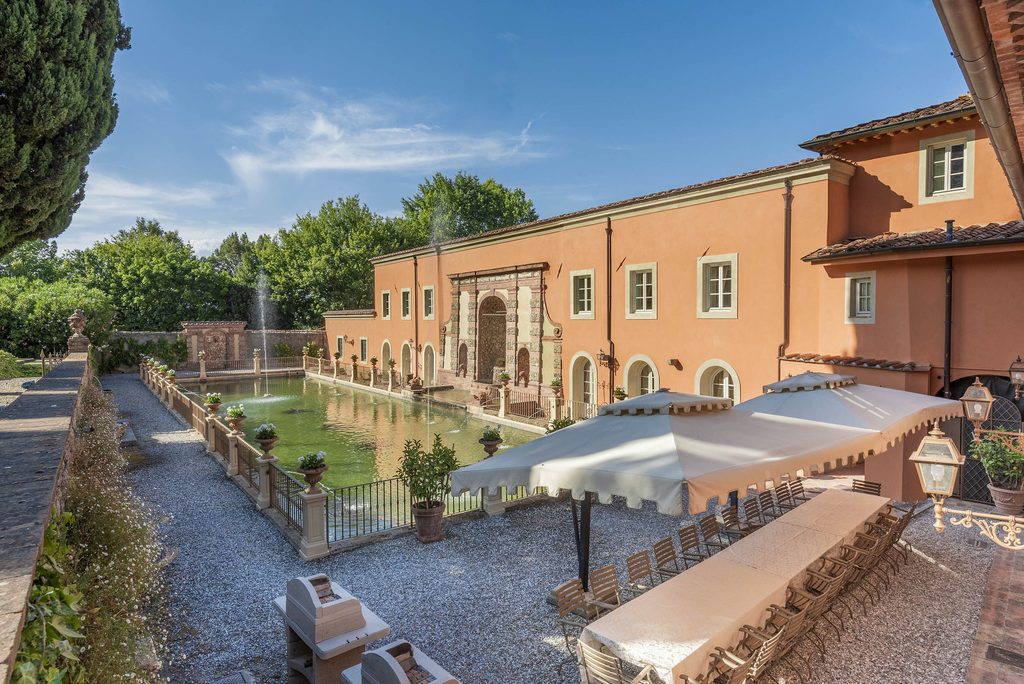
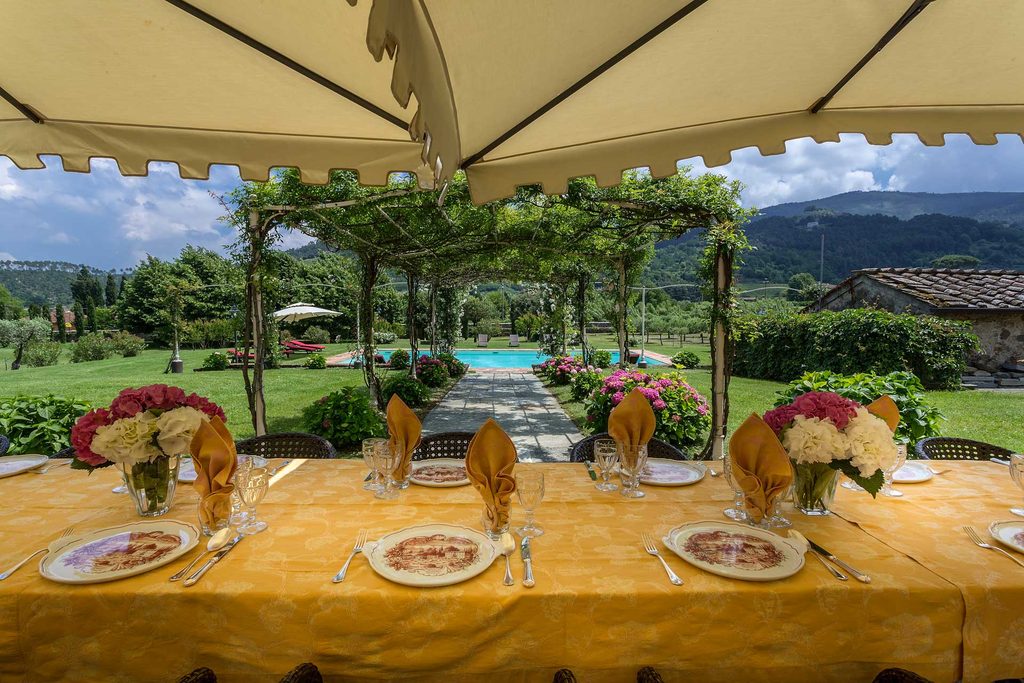
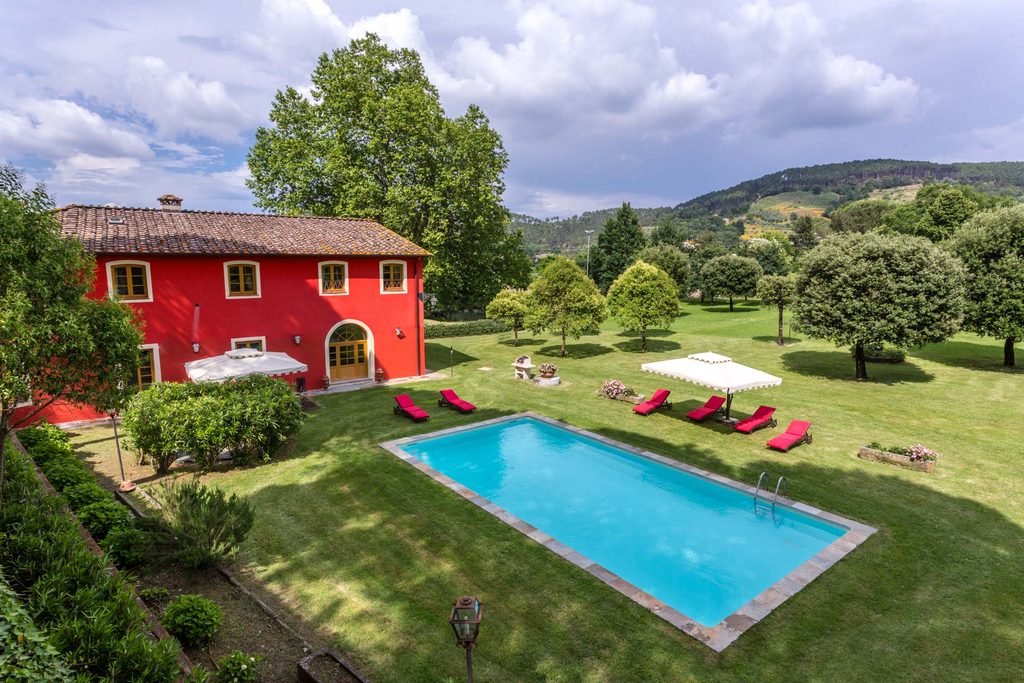
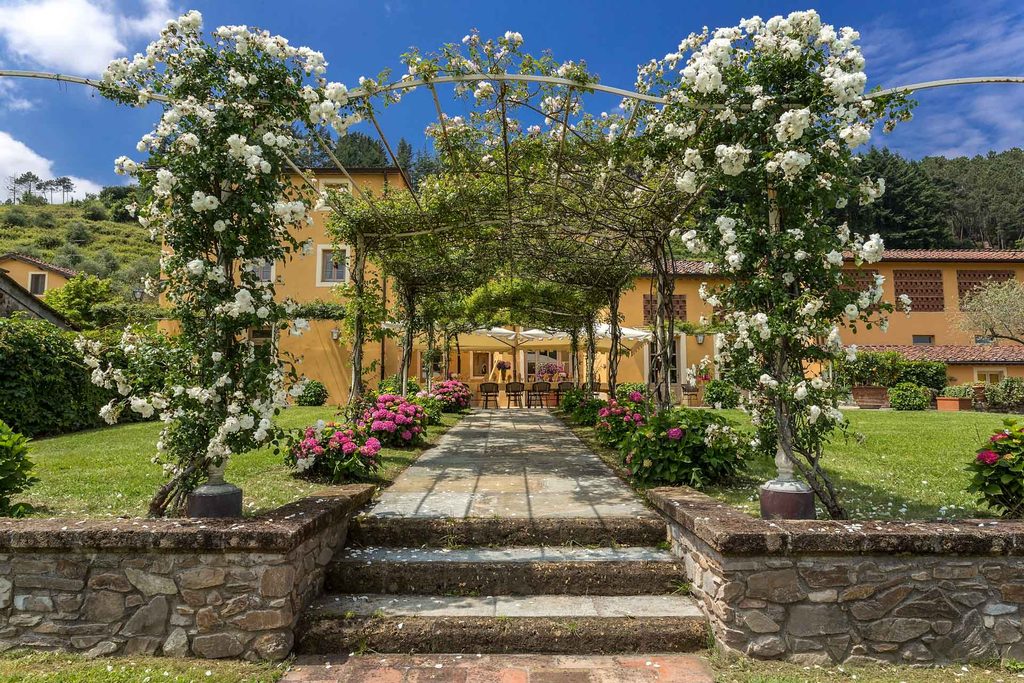
The best way to see the ville lucchesi is to stay in one. Our villas around Lucca include historic houses with their own gardens, pools and long views over the plain. Villa Controni is a grand villa with a private chapel and a pool, about ten minutes from the walls, and Villa Lenka has a pool framed by cypresses and potted lemon trees in true Lucchese style. For a wedding or a milestone celebration, the Coselli Estate in Capannori brings together six villas for up to 101 guests.
See all of our villas near Lucca, read where to stay in Lucca, or ask a Doorways advisor to plan a garden-lover’s week, private guide included.
Frequently asked questions
Which Lucca villa gardens can you visit?
Villa Reale di Marlia, Villa Torrigiani in Camigliano, Villa Grabau and Villa Oliva in San Pancrazio, and Palazzo Pfanner inside the walls are among the best known. Opening days vary, so check before you go.
When is Villa Reale di Marlia open?
The park and museum rooms open daily from early spring to late October. Allow at least two hours.
What is the best season to visit Lucca's gardens?
April and May for camellias, azaleas and roses, and September for softer light and fewer visitors.